The Confraternal Order of Saint Camillus de Lellis
A Private Society of Gentlemen & Ladies — In Caritate et Servitio
"Maggiore aiuto ai malati" — Greater aid to the sick
Founded in His Name · Drawn from the Noble Houses of Europe
Caritas · Fraternitas · Servitium · In Nomine Sancti Camilli · Adiuva Infirmos
Who We Are
A Confraternal Society of Enduring Purpose
The Confraternal Order of Saint Camillus de Lellis is a private society open to gentlemen and noblemen, ladies and noblewomen, drawn principally from the cultivated and ancient houses of Europe. We are bound together not merely by birth or station, but by a shared devotion to charitable service, to Christian brotherhood and sisterhood, and to the enduring example of our holy patron — the great Camillus, soldier become servant of the sick.
The Order is neither a political nor a commercial body. It is a confraternity in the ancient and honourable sense: an association of persons pledged to one another and to a common purpose, living according to a rule freely accepted and willingly observed. Our members come from across the continent — from Italy and France, from Spain and Portugal, from Germany and Austria, from the British Isles, from Poland, and from all nations whose histories are woven together in the fabric of Christian Europe.
We gather in good fellowship, observe the sacred calendar, undertake works of charity in the name of our patron, and maintain the bonds of fraternal and sororal solidarity that give our association its life. The Order is a home for those who take seriously the duties of their station — and who understand that privilege carries with it an obligation to serve.
In Caritate et Servitio Sub tutela Sancti Camilli
"We, the founding members, pledge ourselves to one another in a spirit of Christian brotherhood and sisterhood, mutual charity, and shared devotion to the memory and example of our Holy Patron."
— Founding Charter of the Order
Explore the Order
Legal Notice & Disclaimers. The Confraternal Order of Saint Camillus de Lellis is an independent private association of friends and associates. It is not affiliated with, endorsed by, or connected to the Roman Catholic Church, the Holy See, or any ecclesiastical body or authority. It is not affiliated with the Camillians (Order of Saint Camillus, O.S.Cam.), the Ministers of the Infirm, or any other religious institute, congregation, or order bearing the name of Saint Camillus de Lellis. The use of the saint's name is purely honorific and devotional in nature. This association has no canonical standing and makes no claim to any official religious status.
This website is produced for informational purposes only. All historical images, paintings, and artwork reproduced on this website are believed to be in the public domain. No ownership of said images is claimed by this association. If you believe any content infringes upon your rights, please contact us so that the matter may be addressed promptly. Participation in or contact with this association does not constitute membership in any religious, governmental, or legally incorporated body. The heraldic designs displayed on this website are entirely fictional and serve decorative purposes only. Any resemblance to actual coats of arms, past or present, is purely coincidental.
Our Holy Patron
Saint Camillus de Lellis
Soldier, Penitent, Servant of the Sick — A complete life of the heavenly patron of our Order, 1550–1614.
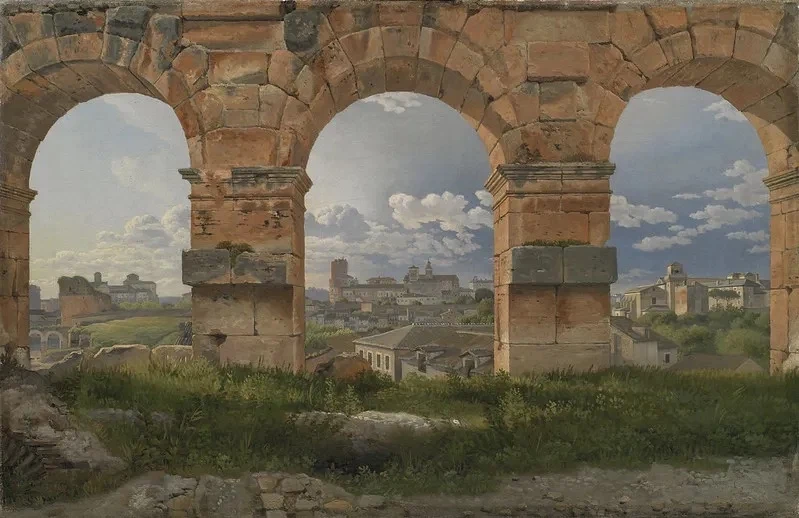
Rome — Where Camillus Founded His Company of the Ministers of the Infirm
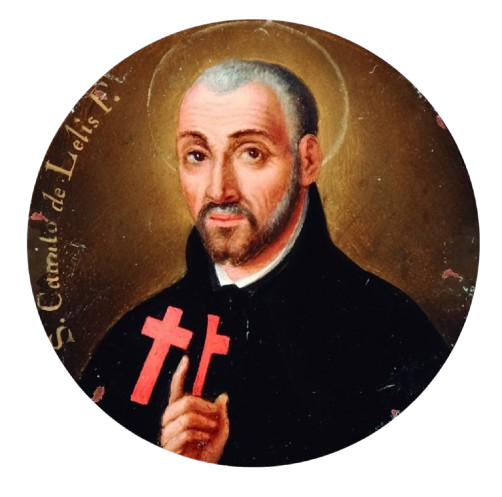
Saint Camillus de Lellis 1550 · 1614 Patron of the Sick & of Nurses
1550 · Bocchianico · Naples
A Soldier Becomes a Saint
Camillo de Lellis was born on the twenty-fifth of May, 1550, in the small hill town of Bucchianico in the Abruzzi, then part of the Kingdom of Naples. He was the son of Giovanni de Lellis, a soldier and minor official of some standing, and of Camilla Compelli, who died giving birth to him — a loss that would cast a long shadow over his early years. From the first, he was a child of exceptional physical stature: accounts describe him as standing eventually well over six feet, broad and powerful, with a tempestuous disposition inherited, as tradition would have it, from his father's military stock.
His father was an absent figure — perpetually at arms in the service of various masters — and the young Camillo received an upbringing that was irregular at best. He received some schooling, but was never a scholar. What he absorbed instead was the culture of arms: a reverence for physical courage, a familiarity with violence, and the restless itinerant life of the soldier-adventurer that was one of the distinguishing features of sixteenth-century Italy. He followed his father to the wars while still an adolescent, serving in the long conflict between Venice and the Ottoman Empire.
The Years of Dissipation
The Soldier's Life, 1564–1575
The defining vice of Camillo's youth was gambling. He was, by his own later confession, a compulsive and ruinous gambler — a condition that reduced him, at various points, to destitution. He gambled away everything he possessed, including, on one notorious occasion, his own coat. This was not merely a moral failing but a practical catastrophe: it made him unreliable, unemployable in any sustained capacity, and dependent on the charity of strangers and occasional military service to survive.
In the early 1570s, he served in the military forces of various Italian lords and, for a period, in the Venetian campaigns against the Ottomans. He fought in the great naval battle of Lepanto in 1571, though his role in that engagement was a minor one. He contracted a chronic and painful ulceration of his leg — an affliction that would torment him for the remainder of his life and that brought him, twice, to the hospital of San Giacomo degli Incurabili in Rome, once in 1571 and again around 1575.
The hospital of San Giacomo was one of the great charitable institutions of Counter-Reformation Rome: a large, well-endowed establishment dedicated to the care of incurable patients, staffed by a mixture of paid attendants and religious volunteers. The conditions of care it provided, though considered adequate by the standards of the age, horrified the young Camillo. He observed that the paid attendants were often rough, negligent, and indifferent to the suffering of their charges — treating the sick as a burden to be managed rather than persons to be served. This observation would plant the seed of his eventual vocation.
The hospital authorities found Camillo himself difficult: he was discharged, it appears, for his quarrelsome temperament and his inability to submit to discipline. He returned to the road, resuming his wandering, gambling, soldiering life. By his mid-twenties, he was a failure by any worldly standard — impoverished, physically afflicted, without stable employment or social position, and conscious of the emptiness of the life he was leading.
The Great Conversion
Grace and Transformation, 1575
The conversion of Camillo de Lellis is one of the most celebrated sudden transformations in the hagiographical record of the Counter-Reformation. The occasion was unremarkable in itself: in February 1575, while employed in construction work on a Capuchin building near Manfredonia, he was rebuked by a friar for his worldly and dissolute way of life. The rebuke — simple, direct, not especially harsh — struck Camillo with the force of a thunderclap. He fell to his knees in the open countryside and underwent what he would later describe as a total interior revolution.
He immediately sought admission to the Capuchin novitiate — a step that reflects both the depth of his conversion and the somewhat impulsive character that would remain with him throughout his life. He was accepted, but his persistent leg ulcer, which refused to heal, made it impossible for him to continue the rigorous physical life of the Order. He was dismissed twice from the Capuchins on medical grounds, a rejection that caused him profound suffering.
Returning to Rome, he placed himself under the spiritual direction of Saint Philip Neri, the great Roman apostle of the laity, who became one of the most important influences on his development. Philip Neri recognised in Camillo a genuine and profound vocation — not to the cloister, but to a new form of active apostolate. He guided Camillo toward the hospital, encouraging him to return to San Giacomo as a volunteer and to explore what specific work God might be calling him to do.
At San Giacomo, Camillo threw himself into the work of caring for the sick with a fervour that astonished those around him. He was now a different man from the turbulent youth who had been discharged years before: organised, devoted, capable of inspiring others, and possessed of a clear vision of what proper care for the sick should look like. Within a few years, he had risen to the position of administrator of the hospital — a remarkable achievement for a man without education, connections, or prior administrative experience.
"The sick are our lords and masters. We must serve them as we would serve Christ himself — and indeed, that is precisely what we are doing."
— Saint Camillus de Lellis
The Ministers of the Infirm
Founding the Company, 1582–1591
The formal foundation of Camillo's work came in 1582, when he gathered a small group of companions — laymen and eventually some clerics — who shared his vision of systematic, compassionate, professional care for the sick. He called them the Company of the Ministers of the Infirm (Compagnia dei Ministri degli Infermi). Their members took a fourth vow, beyond the customary three of poverty, chastity, and obedience: a vow to serve the sick, including those afflicted with plague, until death. This fourth vow was, and remains, the distinguishing mark of the congregation Camillo founded.
Their distinctive emblem was a large red cross worn upon the black habit — a visual sign intended to identify the wearer immediately to the sick and to signal their availability and dedication. The red cross became, through the subsequent history of nursing and medicine, one of the most recognisable symbols in the world: it was adopted, centuries later, as the emblem of the International Red Cross, though in a form and context entirely distinct from its Camillian origins.
From the beginning, Camillo's approach to nursing care was systematic and rigorous in a way that was genuinely innovative for its time. He insisted that the sick be treated with dignity and tenderness, that their spiritual needs be attended to alongside their physical ones, that they not be left alone in their final hours, and that their food and medication be prepared and administered with scrupulous care. He organised his companions into rotas, established protocols, and in effect created something recognisable as a professional nursing service.
In 1591, Pope Gregory XIV formally elevated the Company to the status of an Order of Clerks Regular — the Order of Saint Camillus, or the Camillians (Ordo Clericorum Regularium Ministrantium Infirmis, O.S.Cam.) — giving it full canonical recognition and the right to operate independently of local bishops. Camillo was now, at the age of forty-one, the founder and superior of a recognised religious order, a status he had never sought and which sat uneasily upon a man of such restless, practical temperament.
Works of Mercy
A Life of Service, 1575–1614
For nearly four decades from his conversion, Camillo poured his enormous physical and spiritual energy into the work of caring for the sick. He established houses of his Order in Rome, Naples, Milan, Genoa, Florence, and other cities across Italy. He insisted on serving personally — not merely administering — and continued to nurse the sick with his own hands long after his status as a founder and superior might have been thought to excuse him from such work.
He sent his companions to assist the wounded in military campaigns — an early form of what we would now recognise as military nursing or field medicine. His men served at the Battle of Gran in Hungary in 1595 and at other engagements, going onto battlefields to care for the wounded of both sides. This impartial service to the suffering, regardless of allegiance, was a radical principle in an age of fierce confessional and political conflict.
His own body was a constant trial. The leg ulcer that had brought him to the hospital never fully healed; he suffered from hernias, kidney stones, and a variety of other painful conditions throughout his adult life, continuing to nurse the sick and to govern his Order through decades of chronic pain. He was, in his own person, both nurse and patient — a servant of the suffering who understood suffering from the inside.
Contemporaries described him as a man of great personal authority: commanding in presence, direct in manner, sometimes harsh in his demands upon himself and his companions, but capable also of extraordinary tenderness with the sick and the dying. He had none of the courtly refinement of a Philip Neri or the systematic theological culture of an Ignatius of Loyola; what he had instead was an overwhelming practical charity, a ferocious will, and the rare ability to transmit his vision to others.
Death and Eternal Honour
Death, Beatification, and Canonisation
Camillo de Lellis died in Rome on the fourteenth of July, 1614, at the age of sixty-four. He had spent the last weeks of his life barely able to rise from his bed, yet insisting on being carried to the hospital so that he might die, if possible, among the sick. He died at the house of his Order on the Via della Madonna, worn out by a lifetime of physical labour and chronic illness, but, by all accounts, in profound peace.
The city of Rome received the news of his death as the loss of one of its own. He was buried with great honour, and the veneration of the faithful was immediate. The process of formal beatification was initiated within decades, and he was beatified by Pope Benedict XIII in 1742. Four years later, on the twenty-ninth of June, 1746, he was canonised by Pope Benedict XIV in a ceremony of great solemnity.
At his canonisation, Benedict XIV declared Saint Camillus de Lellis the co-patron, together with Saint John of God, of the sick, of nurses, of hospital workers, and of all who care for the infirm. This declaration was later extended and confirmed by subsequent popes, and in 1930 Pope Pius XI formally proclaimed him the heavenly patron of all nurses and of the sick. His feast day, the eighteenth of July, was established in the universal calendar of the Roman Catholic Church.
The Order he founded continues its work to this day in numerous countries, operating hospitals, hospices, and other institutions for the care of the sick and dying. The red cross upon black — the emblem Camillo chose for his companions — remains the distinctive mark of the Camillian congregation, a living connection to the vision of the great reformer of nursing who lies buried beneath the high altar of the Church of Saint Mary Magdalene in Rome.
"Put more heart into it."
— Saint Camillus de Lellis, his habitual admonition to his companions
His Legacy and Our Order
Camillus and the Confraternal Tradition
The Confraternal Order of Saint Camillus de Lellis takes its name and its inspiration from this great saint not as an ornament but as a genuine guide. We are not the Order of Clerks Regular that Camillo founded — that ancient congregation continues its own distinct mission — but a lay confraternal society that seeks to carry forward the spirit of his example: the conviction that the Christian calling is a calling to serve, that charity is not an abstraction but a practice, and that the sick and suffering occupy a privileged place in the economy of Christian mercy.
Camillo's great insight was practical and organisational as much as spiritual: that compassion, to be effective, must be structured, sustained, and professionalised. The lay confraternal tradition that our Order inherits drew, in the centuries before Camillo's birth, upon exactly the same impulse — the impulse to give organised, lasting, and dignified expression to the Christian duty of caring for the sick. In claiming him as our patron, we claim that tradition entire.
His feast day, the eighteenth of July, is the principal observance of our Order's year — the occasion for our fullest gathering, our most solemn common prayer, and the renewal of our common purpose. On that day we remember a man who was, by his own account, a sinner transformed: a gambler who became a servant, a soldier who became a nurse, a man of violence who became, in the end, one of the most compelling witnesses to the power of grace that the Church of the Counter-Reformation produced.
"We gather each year on the feast of our patron not merely to commemorate a historical figure, but to renew our commitment to what he embodied — the ancient and honourable calling of those who place themselves at the service of the suffering."
— Founding Charter, Preamble
The Life of Saint Camillus
A Complete Chronology
1550
Born 25 May in Bucchianico, Kingdom of Naples, to Giovanni de Lellis and Camilla Compelli. His mother dies at his birth.
1562
Father dies, leaving Camillo effectively orphaned at twelve. Begins an itinerant life.
1569
Enlists as a mercenary soldier; serves in the wars of various Italian lords. Contracts the leg ulcer that will afflict him for life.
1571
Present at the Battle of Lepanto, 7 October. First admission to the Hospital of San Giacomo degli Incurabili, Rome.
1574–1575
Second sojourn at San Giacomo. Discharged for difficult temperament. Continues wandering and gambling.
1575
February: Sudden and total conversion near Manfredonia, while working on a Capuchin building. Seeks admission to the Capuchins.
1575–1579
Twice admitted to and twice dismissed from the Capuchin novitiate on medical grounds. Returns to Rome.
1579
Comes under the spiritual direction of Saint Philip Neri. Returns to San Giacomo as a volunteer.
1581
Ordained a subdeacon. Appointed administrator of San Giacomo.
1582
Founds the Company of the Ministers of the Infirm in Rome. Members take the distinctive fourth vow to serve the sick unto death.
1584
Ordained a priest; receives the red cross emblem for his companions.
1586
Pope Sixtus V gives formal approval to the Company. Camillo opens a second house in Naples.
1591
Pope Gregory XIV elevates the Company to the Order of Clerks Regular, with full canonical status. Houses opened in Milan, Genoa, and Florence.
1595
Camillians sent to serve the wounded at the Battle of Gran (Esztergom) in Hungary — among the first instances of organised battlefield nursing.
1607
Resigns as Superior General of the Order due to declining health, retaining an advisory role.
1614
Dies in Rome, 14 July, surrounded by his companions. Buried with great honour; immediate popular veneration.
1742
Beatified by Pope Benedict XIII.
1746
Canonised by Pope Benedict XIV, 29 June. Declared co-patron of the sick and of nurses.
1930
Pope Pius XI proclaims him the heavenly patron of all nurses and of all the sick.
Legal Notice & Disclaimers. The Confraternal Order of Saint Camillus de Lellis is an independent private association of friends and associates. It is not affiliated with, endorsed by, or connected to the Roman Catholic Church, the Holy See, or any ecclesiastical body or authority. It is not affiliated with the Camillians (Order of Saint Camillus, O.S.Cam.), the Ministers of the Infirm, or any other religious institute, congregation, or order bearing the name of Saint Camillus de Lellis. The use of the saint's name is purely honorific and devotional in nature. This association has no canonical standing and makes no claim to any official religious status.
This website is produced for informational purposes only. All historical images, paintings, and artwork reproduced on this website are believed to be in the public domain. No ownership of said images is claimed by this association. If you believe any content infringes upon your rights, please contact us so that the matter may be addressed promptly. Participation in or contact with this association does not constitute membership in any religious, governmental, or legally incorporated body. The heraldic designs displayed on this website are entirely fictional and serve decorative purposes only. Any resemblance to actual coats of arms, past or present, is purely coincidental.
The Order & Its Patron
History, Spirit, and Sacred Purpose
On the origins of our confraternity, the life of its heavenly patron, and the principles by which we are governed.
Rome — City of Saint Camillus
Our Founding
The Confraternal Order and Its Origins
The Confraternal Order of Saint Camillus de Lellis was established by a company of gentlemen and ladies who shared a conviction that the bonds of traditional confraternal life had not passed away from the modern world — but merely awaited those with the will to revive them. The Order was founded in the name and memory of San Camillo de Lellis, the great Italian saint whose life exemplified the radical transformation that grace effects in even the most unpromising of souls.
Our confraternity is modelled, in spirit if not in every detail, upon the great lay confraternities that flourished throughout Catholic Europe from the medieval period onward — associations of laypeople united by devotion, mutual charity, and a desire to perform works of mercy in an organised and sustained manner. The Misericordie of Italy, the archconfraternities of France and Spain, the sodalities of Germany and the Empire — these were for centuries among the most important organs of civil society in Christian Europe.
We do not merely imitate these predecessors. We carry forward their spirit, adapted to the circumstances of our own age, in a society that combines rigorous traditional form with genuine fraternal warmth.
The founding members came together from various backgrounds and nations, united by their faith, their sense of social obligation, and their admiration for the example of Saint Camillus. They drew up a Charter — the foundational law of the Order — and adopted a rule of conduct, a set of purposes, and a structure of governance that reflects the best of the confraternal tradition.
The Order is open to gentlemen and noblemen, ladies and noblewomen, principally of European origin or connection, who are of good character, Christian faith, and willing to be bound by the obligations of membership. Membership is not a social ornament but a genuine commitment — to the purposes of the Order, to the well-being of its members, and to the works of charity that give the confraternity its reason for existence.
"An association of persons pledged to one another and to a common purpose, living according to a rule freely accepted and willingly observed."
— Preamble, Founding Charter
San Camillo de Lellis 1550 · 1614 Patron of the Sick & of Nurses
Our Holy Patron
Saint Camillus de Lellis Soldier, Penitent, Servant
Camillo de Lellis was born in 1550 in Bocchianico, in the Kingdom of Naples, to a military family. His early life was marked by dissipation: he was a man of great physical stature — said to have stood six feet tall — with a soldier's temperament, a weakness for gambling, and little evident piety. He served as a mercenary in various campaigns before a serious affliction of his leg brought him, twice, to the hospital of San Giacomo in Rome.
It was in the hospitals that Camillus found his vocation. Appalled by the inadequacy of care provided to the sick and dying, he resolved to found a company of men dedicated to the proper and charitable care of the ill. In 1582, he established the Company of the Ministers of the Infirm. Their distinctive mark was a large red cross worn upon the habit — a sign recognised to this day.
Camillus and his companions were among the first to develop what we would now call professional standards of nursing care. He died in Rome in 1614, worn out by decades of service. Canonised in 1746 by Pope Benedict XIV, he was declared the patron of the sick, of nurses, and of all hospital workers. His feast day is the eighteenth of July.
1550
Born in Bocchianico, Kingdom of Naples, to a family of soldiers.
1574–1575
First sojourns at the Hospital of San Giacomo, Rome; early stirrings of conversion.
1582
Founds the Company of the Ministers of the Infirm in Rome.
1591
Order of Clerics Regular formally constituted by Pope Gregory XIV.
1614
Dies in Rome on 14 July, revered throughout the city.
1746
Canonised by Pope Benedict XIV; declared patron of the sick and of nurses.
Legal Notice & Disclaimers. The Confraternal Order of Saint Camillus de Lellis is an independent private association of friends and associates. It is not affiliated with, endorsed by, or connected to the Roman Catholic Church, the Holy See, or any ecclesiastical body or authority. It is not affiliated with the Camillians (Order of Saint Camillus, O.S.Cam.), the Ministers of the Infirm, or any other religious institute, congregation, or order bearing the name of Saint Camillus de Lellis. The use of the saint's name is purely honorific and devotional in nature. This association has no canonical standing and makes no claim to any official religious status.
This website is produced for informational purposes only. All historical images, paintings, and artwork reproduced on this website are believed to be in the public domain. No ownership of said images is claimed by this association. If you believe any content infringes upon your rights, please contact us so that the matter may be addressed promptly. Participation in or contact with this association does not constitute membership in any religious, governmental, or legally incorporated body. The heraldic designs displayed on this website are entirely fictional and serve decorative purposes only. Any resemblance to actual coats of arms, past or present, is purely coincidental.
Joining the Order
Membership & Reception
The Order admits gentlemen and noblemen, ladies and noblewomen, of good character, Christian faith, and genuine commitment to its purposes. Admission is by invitation and election.
The Ancient Heritage of Europe
Who May Apply
Eligibility & Character
The Confraternal Order of Saint Camillus de Lellis is a society for gentlemen and noblemen, ladies and noblewomen — principally drawn from the ancient and cultivated families of Europe, though the Order does not restrict itself by blood alone. What it seeks in its members is not merely birth, but character: the qualities of honour, courtesy, generosity, and faith that have always been the true marks of those fitted for the confraternal life.
Ladies and noblewomen are full members of the Order in every sense — not guests or associates by sufferance, but integral members of the Brotherhood and Sisterhood, holding the same obligations and enjoying the same standing as their male counterparts. The Order recognises that the works of charity and the life of the confraternity are no less fitting for women than for men.
Criteria for Admission
I.The candidate shall be a Christian, holding the faith as a living reality.
II.The candidate shall be of good moral character, untarnished by any public disgrace.
III.The candidate shall be introduced by a member in good standing, who shall vouch for their suitability.
IV.The candidate shall be of gentle or noble birth, or have acquired through distinction a standing equivalent to the gentry.
V.The candidate shall demonstrate a genuine commitment to the charitable purposes of the Order.
VI.The candidate shall be willing to be bound by the Charter and obligations of membership in good faith.
"The Order seeks not merely birth, but character — the qualities of honour, courtesy, generosity, and faith that have always been the true marks of those fitted for confraternal life."
— Membership Statute, Article IV
Nations & Provenance
The Order draws principally from European membership, across all the nations of the continent — Italy, France, Spain, Portugal, Germany, Austria, Poland, Hungary, the British Isles, the Low Countries, and beyond. Members of European descent or formation settled elsewhere in the world are likewise eligible for consideration.
The Order conducts its proceedings in the great languages of Europe — principally English, French, Italian, German, and Latin for ceremonial purposes. Members are not required to hold a title of nobility; the gentry is fully eligible.
Degrees of Standing
The Four Grades of Membership
I
Knight Grand Cross Dame Grand Cross
Eques Magnae Crucis
The founding members and those elevated by unanimous resolution. Knights and Dames Grand Cross bear special responsibility for the direction of the Order and serve as its conscience and memory.
II
Knight Commander Dame Commander
Eques Commendator
Members who have served with distinction and been elevated by vote of the membership. Knights and Dames Commander are eligible for all offices and carry enhanced responsibility.
III
Knight of the Order
Eques Ordinis
The standard grade of full membership, conferred upon a candidate formally proposed, approved, and received. Knights of the Order hold full voting rights and are bound by all Charter obligations.
IV
Aspirant
Aspirans
A candidate under consideration for full membership who has been introduced and provisionally received. The period of aspiration allows full acquaintance with the Order before formal reception.
The Path to Membership
The Process of Reception
1
Introduction by a Member
All candidates must be introduced by a member in good standing, who will vouch for the candidate's character and suitability. The introducing member assumes personal responsibility for the conduct and commitment of the candidate.
2
Correspondence with the Chancellor
The candidate addresses a letter of interest to the Chancellor, setting out their background, reasons for seeking membership, and understanding of the Order's purposes. Write to: chancellor@orderofstcamillus.org
3
Meeting with the Officers
The candidate is invited to meet with the officers of the Order in an informal setting — an opportunity for both parties to form a judgment as to whether membership would be fitting.
4
Proposal and Ballot
The candidate is formally proposed at a meeting of the Order by their introducer. The membership votes by secret ballot. A single veto by any Grand Companion defers consideration for one year.
5
Formal Reception
Upon election, the candidate is received into the Order at a formal gathering. The new member makes a declaration of intent, is welcomed by the officers, and assumes the obligations and privileges of membership.
Legal Notice & Disclaimers. The Confraternal Order of Saint Camillus de Lellis is an independent private association of friends and associates. It is not affiliated with, endorsed by, or connected to the Roman Catholic Church, the Holy See, or any ecclesiastical body or authority. It is not affiliated with the Camillians (Order of Saint Camillus, O.S.Cam.), the Ministers of the Infirm, or any other religious institute, congregation, or order bearing the name of Saint Camillus de Lellis. The use of the saint's name is purely honorific and devotional in nature. This association has no canonical standing and makes no claim to any official religious status.
This website is produced for informational purposes only. All historical images, paintings, and artwork reproduced on this website are believed to be in the public domain. No ownership of said images is claimed by this association. If you believe any content infringes upon your rights, please contact us so that the matter may be addressed promptly. Participation in or contact with this association does not constitute membership in any religious, governmental, or legally incorporated body. The heraldic designs displayed on this website are entirely fictional and serve decorative purposes only. Any resemblance to actual coats of arms, past or present, is purely coincidental.
The Founding Document
Charter & Governance
The Charter is the living constitution of the Order — the solemn compact freely entered into by its founders and faithfully transmitted to those who come after them. It establishes the purposes, governance, and obligations of the confraternity in terms designed to endure.
All members are bound by the Charter from the moment of their reception. It may be amended only by a solemn procedure reflecting its foundational character.
Sigillum Ordinis Confraternitatis
Sancti Camilli de Lellis Mexican School, 18th Century
Officers of the Order
Governance & Officers
The Order is governed by its officers, elected by and from the membership, and by the Council of Senior Companions. The officers bear responsibility for the day-to-day affairs of the confraternity and for the faithful execution of the Charter's provisions.
Grand Prior
Prior Magnus
Presides over all gatherings and affairs of the Order. The first officer of the confraternity, custodian of its dignity, and representative to the outside world. Casts the deciding vote in the event of a tie.
Vice Prior
Prior Vicarius
Assists the Grand Prior and assumes their functions when absent. Bears particular responsibility for the conduct of ceremonies and preparation of gatherings.
Chancellor
Cancellarius
Keeper of records: the Register of Members, Minutes of proceedings, Archive of documents, and all correspondence. Primary point of contact for those seeking membership. Write to: chancellor@orderofstcamillus.org
Treasurer
Thesaurarius
Administers the financial affairs of the Order, maintains accounts, receives subscriptions and donations, and reports to the membership on the state of finances at each ordinary gathering.
Almoner
Eleemosynarius
Holds responsibility for the charitable works of the Order — identifying worthy causes, reporting on charitable endeavours, and maintaining the Order's connection with the sick and suffering.
Master of Ceremonies
Magister Caeremoniarum
Oversees the proper conduct of rituals, observances, and formal occasions. Ensures ceremonies are carried out with the dignity befitting a confraternity bearing the name of a saint.
Principal Articles
Selected Articles of the Charter
The principal articles of the founding Charter, summarised for the information of those seeking to understand the Order's constitution.
Article I
Name, Purpose, and Character
The association shall be known as the Confraternal Order of Saint Camillus de Lellis. It is a private confraternal society, not a commercial, political, or public body. Its purposes are charitable, devotional, and fraternal. It is constituted in perpetuity, to endure as long as its members maintain the obligations freely undertaken at its founding.
Article II
Membership and Reception
Membership is open to gentlemen and noblemen, ladies and noblewomen of good character, Christian faith, and genuine commitment to the purposes of the Order. Admission is by invitation and election. The Order reserves the absolute right to admit or decline any candidate without obligation to give reasons.
Article III
Officers and Governance
The Order shall be governed by its officers, elected annually by and from the membership. Officers serve one-year terms renewable by re-election. No officer shall serve more than five consecutive terms in the same office without the unanimous assent of the Senior Companions.
Article IV
Obligations of Members
All members are bound to attend gatherings with reasonable regularity, pay subscriptions punctually, contribute to charitable works according to their means, maintain confidentiality of proceedings, and conduct themselves at all times in a manner befitting a member of the confraternity.
Article V
Charitable Works
The Order shall devote a portion of its resources to charitable works in the spirit of its patron. Priority shall be given to institutions serving the sick and suffering, in direct honour of Saint Camillus de Lellis.
Article VI
Amendment of the Charter
This Charter may be amended only by a resolution passed by a two-thirds majority at an extraordinary session, provided the amendment has been notified in writing at least thirty days in advance. No amendment may alter the name of the Order, its patron, or its fundamental charitable purpose without the unanimous assent of all Grand Companions.
Legal Notice & Disclaimers. The Confraternal Order of Saint Camillus de Lellis is an independent private association of friends and associates. It is not affiliated with, endorsed by, or connected to the Roman Catholic Church, the Holy See, or any ecclesiastical body or authority. It is not affiliated with the Camillians (Order of Saint Camillus, O.S.Cam.), the Ministers of the Infirm, or any other religious institute, congregation, or order bearing the name of Saint Camillus de Lellis. The use of the saint's name is purely honorific and devotional in nature. This association has no canonical standing and makes no claim to any official religious status.
This website is produced for informational purposes only. All historical images, paintings, and artwork reproduced on this website are believed to be in the public domain. No ownership of said images is claimed by this association. If you believe any content infringes upon your rights, please contact us so that the matter may be addressed promptly. Participation in or contact with this association does not constitute membership in any religious, governmental, or legally incorporated body. The heraldic designs displayed on this website are entirely fictional and serve decorative purposes only. Any resemblance to actual coats of arms, past or present, is purely coincidental.
In the Spirit of Our Patron
Works & Observances
The Order gives expression to its purposes through charitable works, sacred observances, and the regular gatherings by which it sustains its fraternal and sororal life.
Charitable Works
Works of mercy performed in honour of the patron of the sick — supporting hospitals, hospices, and those who care for the suffering.
Sacred Observances
Marking the feast of Saint Camillus and the great solemnities of the Church with ceremony, prayer, and fitting celebration.
Regular Gatherings
The Order meets regularly for the conduct of its business, the enjoyment of good fellowship, and the cultivation of the bonds of confraternal life.
The Works of Mercy
Charitable Endeavour
The charitable works of the Order are directed, above all, toward the sick and suffering — in direct homage to the example of Saint Camillus de Lellis. The Almoner, working with the membership, identifies worthy causes and institutions to which the Order can make a meaningful contribution of money, time, or personal engagement.
The Order's charitable activity is not confined to financial donation. Members are encouraged to give of their time and skills — to visit hospitals and hospices, to support caring institutions, to engage personally with those who serve the suffering. The tradition of Camillus was personal, sacrificial, and sustained.
Beyond work with the sick, the Order engages in a broader range of charitable activity — supporting education, the arts, the preservation of European cultural and religious heritage, and the relief of poverty in whatever form it presents itself.
I.Support for hospitals, hospices, and institutions caring for the sick and dying — in honour of the patron's vocation.
II.Personal visitation of the sick and suffering, in the tradition of Camillus and the great nursing orders he inspired.
III.Support for nursing education and the formation of those called to the ministry of care.
IV.Relief of material poverty in the communities where members reside.
V.Preservation of the cultural, artistic, and religious heritage of Christian Europe.
VI.Mutual aid among members — practical, financial, and moral support in times of genuine need.
✦
The Sacred Calendar
Annual Observances
The Order marks its year according to the rhythm of the Church's calendar, punctuated by occasions proper to the confraternity itself.
18 July
Feast of Saint Camillus de Lellis — The principal celebration of the Order's year, marked by a gathering of the full membership, solemn observance, and a formal dinner.
January
New Year Gathering — The first ordinary meeting, at which officers render account and the programme for the year ahead is discussed.
Holy Week
Paschal Observance — Members are encouraged to mark Easter together; the Order may organise a gathering or pilgrimage.
November
Commemoration of Departed Members — All Souls-tide gathering in memory of deceased members, at which their names are read and prayers offered.
December
Advent & Christmas Gathering — A festive gathering combining ordinary meeting with seasonal celebration.
Quarterly
Ordinary Meetings — The Order meets at least quarterly for the conduct of business, charitable reports, and the fellowship of its members.
Legal Notice & Disclaimers. The Confraternal Order of Saint Camillus de Lellis is an independent private association of friends and associates. It is not affiliated with, endorsed by, or connected to the Roman Catholic Church, the Holy See, or any ecclesiastical body or authority. It is not affiliated with the Camillians (Order of Saint Camillus, O.S.Cam.), the Ministers of the Infirm, or any other religious institute, congregation, or order bearing the name of Saint Camillus de Lellis. The use of the saint's name is purely honorific and devotional in nature. This association has no canonical standing and makes no claim to any official religious status.
This website is produced for informational purposes only. All historical images, paintings, and artwork reproduced on this website are believed to be in the public domain. No ownership of said images is claimed by this association. If you believe any content infringes upon your rights, please contact us so that the matter may be addressed promptly. Participation in or contact with this association does not constitute membership in any religious, governmental, or legally incorporated body. The heraldic designs displayed on this website are entirely fictional and serve decorative purposes only. Any resemblance to actual coats of arms, past or present, is purely coincidental.
Roots & Heritage
A Society of European Civilisation
The Confraternal Order of Saint Camillus de Lellis is, in its character and composition, a society of European civilisation — rooted in the Catholic and broadly Christian heritage that formed the nations, families, and traditions from which its members are drawn.
The Order does not regard this as a statement of exclusion, but of formation. It is a society that speaks the languages of Europe, honours the faith of Europe, and recognises in the great confraternal tradition of the continent a living inheritance worthy of perpetuation.
🇮🇹Italia
🇫🇷France
🇪🇸España
🇵🇹Portugal
🇩🇪Deutschland
🇦🇹Österreich
🇬🇧Great Britain
🇵🇱Polska
🇳🇱Nederland
🇧🇪Belgique
🇮🇪Éire
🇨🇭Schweiz
🇬🇷Ελλάδα
🇨🇿Česko
🇩🇰Danmark
🇸🇪Sverige
🇺🇦Україна
🇫🇮Suomi
🇳🇴Norge
🇭🇷Hrvatska
🇸🇰Slovensko
🇸🇮Slovenija
🇷🇴România
🇱🇻Latvija
🇱🇹Lietuva
🇧🇬България
🇪🇪Eesti
🇲🇨Monaco
🇱🇺Lëtzebuerg
🇲🇹Malta
🇬🇪საქართველო
The European Tradition
Heirs to a Great Civilisation
Europe is not merely a geographical expression. It is a civilisation — a coherent tradition of thought, faith, art, law, and social life that took shape over two millennia through the interweaving of classical antiquity, the Christian revelation, and the vigorous genius of the continent's many nations and peoples.
The Confraternal Order regards itself as part of this civilisation and as a modest custodian of its social and spiritual traditions. The confraternal institution itself is a distinctly European creation, arising in the medieval cities of Italy and spreading throughout the Catholic world as a vehicle for lay devotion, charitable organisation, and social solidarity.
Our Order consciously participates in this tradition. We believe the confraternal form is as suited to the present age as to any other, and that the values it embodies — charity, brotherhood and sisterhood, mutual obligation, the integration of the sacred and the social — are not obsolete but urgently needed.
The membership of the Order is drawn from across the European nations, with no preference given to one country over another. Italy, where our patron was born and where his Order flourished, holds a special place in the affection of the confraternity; but all European traditions are equally honoured.
What unites our members is not blood or social rank but a common vision of the good life — shaped by the Christian faith, the European inheritance, and the particular example of Saint Camillus. The Order extends a particular welcome to members who embody the European tradition of the cosmopolitan — those at home in more than one language, one country, one tradition.
✦
The Confraternal Tradition in European History
The lay confraternity is one of the great institutions of European Christian civilisation, and one of the most under-appreciated. From the laudi spirituali groups of thirteenth-century Italy to the great archconfraternities of Baroque Rome, from the Breton pardon brotherhoods to the Corpus Christi guilds of England, the confraternity has been for eight centuries a principal vehicle through which Christian laypeople organised their devotion, charity, and social life.
✦
The Italian Tradition
Italy gave the world the great confraternities of mercy — the Misericordie of Tuscany, and above all the Order of Saint Camillus himself, born in the south and nurtured in Rome. The Italian confraternal tradition is the richest and most various in Europe.
✦
The French Tradition
France produced the archconfraternities of Paris and Lyon, the Confrèries de Charité, and a rich tradition of lay devotional association. French confraternal life was distinguished by theological seriousness and engagement with the great questions of the Church.
✦
The Iberian Tradition
Spain and Portugal gave the world the Hermandades and Cofradías — still living institutions, marching in ancient robes through the streets of Seville at Holy Week. The most publicly visible surviving example of the confraternal tradition.
✦
The Northern Tradition
In Germany, Austria, Poland and Hungary, confraternities flourished in cathedral cities and university towns. The Northern tradition was distinguished by liturgical seriousness, Marian devotion, and close association with the social structures of the Ancien Régime.
In CaritateLatin — Language of the Church
Dans la CharitéFrench
Nella CaritàItalian
In der LiebeGerman
En la CaridadSpanish
Legal Notice & Disclaimers. The Confraternal Order of Saint Camillus de Lellis is an independent private association of friends and associates. It is not affiliated with, endorsed by, or connected to the Roman Catholic Church, the Holy See, or any ecclesiastical body or authority. It is not affiliated with the Camillians (Order of Saint Camillus, O.S.Cam.), the Ministers of the Infirm, or any other religious institute, congregation, or order bearing the name of Saint Camillus de Lellis. The use of the saint's name is purely honorific and devotional in nature. This association has no canonical standing and makes no claim to any official religious status.
This website is produced for informational purposes only. All historical images, paintings, and artwork reproduced on this website are believed to be in the public domain. No ownership of said images is claimed by this association. If you believe any content infringes upon your rights, please contact us so that the matter may be addressed promptly. Participation in or contact with this association does not constitute membership in any religious, governmental, or legally incorporated body. The heraldic designs displayed on this website are entirely fictional and serve decorative purposes only. Any resemblance to actual coats of arms, past or present, is purely coincidental.
Seek the Order
Contact & Enquiries
✦
Address correspondence to the Chancellor of the Order. Sincere inquiries will receive a response within fourteen days.
Aude venire · Dare to come forward
Scribe · Quaere · Accede · Per Caritatem · In Servitio Dei
The Chancellor of the Order is the proper recipient of all correspondence from those outside the membership — whether regarding a wish to seek membership, a proposal for charitable collaboration, or any other matter of substance.
The Order does not solicit correspondence from the merely curious. Those who write should have a genuine purpose. All sincere enquiries will receive a response; the Order reserves the right to decline to correspond on matters it judges inappropriate.
All candidates must be introduced by a current member. Self-referral alone will not result in admission, though enquiries without an introducer may still be considered.
"The Order admits those whom it judges fitted to its spirit. It is not bound to admit any particular candidate, and need give no reason for its decisions."
— Charter, Article II
Correspondence Form
Legal Notice & Disclaimers. The Confraternal Order of Saint Camillus de Lellis is an independent private association of friends and associates. It is not affiliated with, endorsed by, or connected to the Roman Catholic Church, the Holy See, or any ecclesiastical body or authority. It is not affiliated with the Camillians (Order of Saint Camillus, O.S.Cam.), the Ministers of the Infirm, or any other religious institute, congregation, or order bearing the name of Saint Camillus de Lellis. The use of the saint's name is purely honorific and devotional in nature. This association has no canonical standing and makes no claim to any official religious status.
This website is produced for informational purposes only. All historical images, paintings, and artwork reproduced on this website are believed to be in the public domain. No ownership of said images is claimed by this association. If you believe any content infringes upon your rights, please contact us so that the matter may be addressed promptly. Participation in or contact with this association does not constitute membership in any religious, governmental, or legally incorporated body. The heraldic designs displayed on this website are entirely fictional and serve decorative purposes only. Any resemblance to actual coats of arms, past or present, is purely coincidental.
Legal Notice
Legal Disclaimers & Impressum
The nature, scope, and limitations of the Confraternal Order of Saint Camillus de Lellis, set forth for the information of all parties — including mandatory disclosures pursuant to § 5 TMG.
Nature of the Organisation
Status & Purpose
The Confraternal Order of Saint Camillus de Lellis is a private organisation of an honorary, cultural, and symbolic nature, created for exclusively digital purposes. Its existence is manifested through the website orderofstcamillus.org and the electronic media associated with that domain, which together constitute a real, verifiable, and publicly accessible presence on the internet.
✦
Official Recognition
On Official Recognition
The Confraternal Order of Saint Camillus de Lellis does not have official recognition from any State, government, public body, supranational entity, sovereign house, traditional authority, academic institution, professional corporation, or religious denomination.
Consequently, its activities, designations, and actions do not produce legal, administrative, official, or public effects in any legal system.
✦
Terms, Symbols & Designations
On Terms, Symbols, & Designations
The Confraternal Order of Saint Camillus de Lellis is not, nor does it claim to be, an order of chivalry in the historical, legal, or noble sense. Nor does it constitute a military order, an official civil order, or a public-law corporation.
The use of terms, symbols, and designations of historical or traditional inspiration is carried out exclusively for cultural, educational, and representational purposes, without implying legal succession, institutional continuity, or legal legitimacy in relation to ancient, extinct, or existing orders.
✦
Activities
On the Activities of the Order
All activities of the Confraternal Order of Saint Camillus de Lellis are conducted entirely in digital form. At present, no physical documents, printed materials, or tangible items of any kind are issued.
The certificates, attestations, registrations, coats of arms, armorial bearings, honorary titles, and other elements issued or published by the Order are symbolic, cultural, and digital in nature, and fall within the private sphere of the organisation.
Enrolment as a member of the Confraternal Order of Saint Camillus de Lellis is free and does not, in itself, generate legal, administrative, proprietary, hereditary, noble, or representational rights before third parties. Membership has effects only within the internal, symbolic, and cultural framework of the Order.
✦
Impressum
Impressum gemäß § 5 TMG
Angaben gemäß § 5 TMG
Loading contact details…
Verantwortlich für den Inhalt nach § 55 Abs. 2 RStV: Tristan Sokolowski, Bismarckstr. 60, 67655 Kaiserslautern
English: In accordance with § 5 of the German Telemedia Act (TMG), the person responsible
for the content of this website is Tristan Sokolowski, Bismarckstr. 60, 67655 Kaiserslautern, Germany.
Tel: +49 152 267 70171. Email: chancellor@orderofstcamillus.org.
✦
“This association has no canonical standing and makes no claim to any official religious, civic, or noble status. All participation is voluntary and symbolic in nature.”
— Legal Notice of the Order
Legal Notice & Disclaimers. The Confraternal Order of Saint Camillus de Lellis is an independent private association of friends and associates. It is not affiliated with, endorsed by, or connected to the Roman Catholic Church, the Holy See, or any ecclesiastical body or authority. It is not affiliated with the Camillians (Order of Saint Camillus, O.S.Cam.), the Ministers of the Infirm, or any other religious institute, congregation, or order bearing the name of Saint Camillus de Lellis. The use of the saint's name is purely honorific and devotional in nature. This association has no canonical standing and makes no claim to any official religious status.
This website is produced for informational purposes only. All historical images, paintings, and artwork reproduced on this website are believed to be in the public domain. No ownership of said images is claimed by this association. If you believe any content infringes upon your rights, please contact us so that the matter may be addressed promptly. Participation in or contact with this association does not constitute membership in any religious, governmental, or legally incorporated body. The heraldic designs displayed on this website are entirely fictional and serve decorative purposes only. Any resemblance to actual coats of arms, past or present, is purely coincidental.
This site uses no tracking or analytics cookies — only technically necessary ones.
By continuing, you acknowledge our
.
Diese Website verwendet ausschließlich technisch notwendige Cookies und kein Tracking.
Mit der Nutzung stimmen Sie unserer
zu.
Questo sito utilizza esclusivamente cookie tecnici necessari e non effettua alcun tracciamento.
Continuando a navigare, l'utente prende atto della nostra
.
Ce site n'utilise que des cookies strictement nécessaires à son fonctionnement et n'effectue aucun suivi.
En continuant votre navigation, vous prenez connaissance de notre
.
Este sitio utiliza únicamente las cookies estrictamente necesarias para su funcionamiento y no realiza
ningún tipo de rastreo. Al continuar navegando, usted toma conocimiento de nuestra
.
Este sítio utiliza exclusivamente os cookies estritamente necessários ao seu funcionamento e não
efectua qualquer rastreio. Ao continuar a navegar, o utilizador toma conhecimento da nossa
.
Deze website gebruikt uitsluitend technisch noodzakelijke cookies en voert geen
tracking uit. Door verder te browsen erkent u ons
.
Haec pagina interretialis utitur solum cookies technice necessariis et nullum vestigium exercet.
Navigando pergendo, utens nostram
agnoscit.
Αυτός ο ιστότοπος χρησιμοποιεί μόνο τεχνικά απαραίτητα cookies και δεν πραγματοποιεί καμία παρακολούθηση.
Συνεχίζοντας την περιήγηση, αποδέχεστε την
μας.
Dette nettstedet bruker utelukkende teknisk nødvendige informasjonskapsler og foretar ingen
sporing. Ved å fortsette å surfe bekrefter du vår
.
Tämä verkkosivusto käyttää ainoastaan teknisesti välttämättömiä evästeitä eikä suorita
seurantaa. Jatkamalla selaamista vahvistat
.
Цей веб-сайт використовує виключно технічно необхідні файли cookie і не здійснює
жодного відстеження. Продовжуючи перегляд, ви підтверджуєте нашу
.
Denna webbplats använder uteslutande tekniskt nödvändiga kakor och utför ingen
spårning. Genom att fortsätta surfa bekräftar du vår
.
Niniejsza strona wykorzystuje wyłącznie technicznie niezbędne pliki cookie i nie stosuje żadnego
śledzenia. Kontynuując przeglądanie, użytkownik przyjmuje do wiadomości naszą
.
Tato stránka používá výhradně technicky nezbytné soubory cookie a neprovádí žádné sledování.
Pokračováním v prohlížení potvrzujete naše
.
Ez a weboldal kizárólag technikailag szükséges sütiket használ, és semmilyen nyomkövetést nem végez.
A böngészés folytatásával Ön tudomásul veszi az
.
To spletno mesto uporablja izključno tehnično nujno potrebne piškotke in ne izvaja sledenja.
Z nadaljevanjem brskanja potrjujete naše
.
Ova web stranica koristi isključivo tehnički neophodne kolačiće i ne provodi nikakvo praćenje.
Nastavkom pregledavanja potvrđujete naše
.
Táto webová stránka používa výlučne technicky nevyhnutné súbory cookie a nevykonáva žiadne sledovanie.
Pokračovaním v prehliadaní potvrdzujete naše
.
Acest site utilizează exclusiv cookie-uri strict necesare din punct de vedere tehnic și nu efectuează
nicio urmărire. Continuând navigarea, confirmați
.
Aquest lloc web utilitza exclusivament les galetes estrictament necessàries i no realitza cap
seguiment. En continuar navegant, accepteu la nostra
.
Bu web sitesi yalnızca teknik olarak zorunlu çerezleri kullanmakta olup hiçbir izleme işlemi gerçekleştirmemektedir.
Gezinmeye devam ederek
kabul etmiş sayılırsınız.
يستخدم هذا الموقع ملفات تعريف الارتباط الضرورية تقنياً فحسب، ولا يُجري أيّ تتبع.
بمواصلة التصفح، فإنك تُقرّ بموافقتك على
.
אתר זה משתמש אך ורק בעוגיות הנחוצות מבחינה טכנית ואינו מבצע מעקב כלשהו.
בהמשך הגלישה, הנך מאשר את
שלנו.
Šioje svetainėje naudojami tik techniškai būtini slapukai ir nevykdomas joks stebėjimas.
Tęsdami naršymą, jūs patvirtinate mūsų
.
Este website utiliza exclusivamente os cookies estritamente necessários e não realiza
nenhum rastreamento. Ao continuar navegando, você confirma nossa
.
ეს ვებსაიტი იყენებს მხოლოდ ტექნიკურად აუცილებელ ქუქი-ფაილებს და არ ახორციელებს
თვალთვალს. გვერდის გამოყენების გაგრძელებით, თქვენ ადასტურებთ ჩვენს
.
Dette website anvender udelukkende teknisk nødvendige cookies og foretager ingen sporing.
Ved at fortsætte din browsing bekræfter du vores
.
Privacy Policy
Privacy Policy
Information on the processing of personal data — GDPR / DSGVO / RGPD / RODO
Language:
1. Data Controller
Responsible Party
The party responsible for data processing on this website, within the meaning of the General Data Protection Regulation (GDPR), is:
1. Verantwortlicher
d) Clippy Jesus
Diese Website enthält einen interaktiven Assistenten („Clippy Jesus“). Ein Klick auf ihn öffnet eine zufällige Bibelstelle über Bible Gateway. Eine versteckte Schaltfläche oben rechts in seinem Dialogfeld ruft „Evil Clippy“ auf. Ein Klick auf Evil Clippy leitet auf eine Google-Bildersuche nach dem Rapper Drake weiter. Es gelten die Datenschutzbestimmungen von Google: policies.google.com/privacy. Beide Assistenten können über die Schaltfläche „Close“ geschlossen werden. Diese Website übermittelt keine personenbezogenen Daten an Google oder Bible Gateway.
Verantwortliche Stelle
Verantwortlicher im Sinne der Datenschutz-Grundverordnung (DSGVO) und sonstiger datenschutzrechtlicher Bestimmungen ist:
1. Titolare del Trattamento
d) Clippy Gesù
Questo sito include un assistente interattivo (“Clippy Gesù”). Cliccandolo si apre un versetto biblico casuale tramite Bible Gateway. Un pulsante nascosto in alto a destra nel fumetto richiama “Evil Clippy”, cliccando il quale si viene reindirizzati a Google Immagini per il rapper Drake. Si applicano le norme sulla privacy di Google: policies.google.com/privacy. Entrambi gli assistenti possono essere chiusi tramite il pulsante “Close”.
Soggetto Responsabile
Il titolare del trattamento dei dati personali ai sensi del Regolamento Generale sulla Protezione dei Dati (RGPD) è:
1. Responsable du Traitement
d) Clippy Jésus
Ce site comporte un assistant interactif (« Clippy Jésus »). Cliquer dessus ouvre un verset biblique aléatoire via Bible Gateway. Un bouton caché en haut à droite de sa bulle fait apparaître « Evil Clippy », dont le clic vous redirige vers Google Images pour le rappeur Drake. La politique de confidentialité de Google s'applique : policies.google.com/privacy. Les deux assistants peuvent être fermés via le bouton « Close ».
Entité Responsable
Le responsable du traitement des données personnelles au sens du Règlement Général sur la Protection des Données (RGPD) est :
1. Responsable del Tratamiento
d) Clippy Jesús
Este sitio incluye un asistente interactivo (“Clippy Jesús”). Al hacer clic en él se abre un versículo bíblico aleatorio mediante Bible Gateway. Un botón oculto en la parte superior derecha de su burbuja invoca a “Evil Clippy”, cuyo clic le redirige a Google Imágenes del rapero Drake. Se aplica la política de privacidad de Google: policies.google.com/privacy. Ambos asistentes pueden cerrarse mediante el botón “Close”.
Entidad Responsable
El responsable del tratamiento de los datos personales en el sentido del Reglamento General de Protección de Datos (RGPD) es:
1. Responsável pelo Tratamento
d) Clippy Jesus
Este site inclui um assistente interativo (“Clippy Jesus”). Clicar nele abre um versículo bíblico aleatório via Bible Gateway. Um botão oculto no canto superior direito da sua bolha invoca o “Evil Clippy”, cujo clique redireciona para uma pesquisa de imagens do rapper Drake no Google. Aplica-se a política de privacidade do Google: policies.google.com/privacy. Ambos os assistentes podem ser fechados pelo botão “Close”.
Entidade Responsável
O responsável pelo tratamento dos dados pessoais, na acepção do Regulamento Geral sobre a Protecção de Dados (RGPD), é:
1. Administrator Danych
d) Clippy Jezus
Ta strona zawiera interaktywnego asystenta („Clippy Jezus”). Klikniêcie go otwiera losowy werset biblijny przez Bible Gateway. Ukryty przycisk w prawym górnym rogu dymku przywołuje „Evil Clippy”, którego klikniêcie przekierowuje do wyszukiwania grafiki Google rapera Drake’a. Obowiązuje polityka prywatności Google: policies.google.com/privacy. Obaj asystenci mogą być zamkniêci przyciskiem „Close”.
Podmiot Odpowiedzialny
Administratorem danych osobowych w rozumieniu Ogólnego Rozporządzenia o Ochronie Danych (RODO) jest:
1. Moderator Datorum
Subiectum Responsabile
Moderator datorum personalium secundum Regulamentum Generale de Tutela Datorum (GDPR) est:
1. Verwerkingsverantwoordelijke
d) Clippy Jezus
Deze website bevat een interactieve assistent (“Clippy Jezus”). Klikken hierop opent een willekeurig bijbelvers via Bible Gateway. Een verborgen knop rechtsboven in zijn tekstballon roept “Evil Clippy” op, waarop klikken u naar een Google Afbeeldingen-zoekopdracht voor rapper Drake leidt. Het privacybeleid van Google is van toepassing: policies.google.com/privacy. Beide assistenten kunnen worden gesloten via de knop “Close”.
Verantwoordelijke Partij
De partij verantwoordelijk voor de verwerking van persoonsgegevens op deze website, in de zin van de Algemene Verordening Gegevensbescherming (AVG/GDPR), is:
1. Behandlingsansvarlig
Ansvarlig Part
Parten ansvarlig for behandling av personopplysninger på dette nettstedet, i henhold til den generelle personvernforordningen (GDPR), er:
1. Personuppgiftsansvarig
Ansvarig Part
Den part som ansvarar för behandling av personuppgifter på denna webbplats, i den mening som avses i den allmänna dataskyddsförordningen (GDPR), är:
1. Відповідальна Сторона
Відповідальна Сторона
Сторона, відповідальна за обробку персональних даних на цьому веб-сайті відповідно до Загального регламенту захисту даних (GDPR), є:
1. Rekisterinpitäjä
Vastuullinen Osapuoli
Tämän verkkosivuston henkilötietojen käsittelystä vastaava osapuoli yleisen tietosuoja-asetuksen (GDPR) tarkoittamassa mielessä on:
1. Správce Údajů
Odpovědná Strana
Stranou odpovědnou za zpracování osobních údajů na tomto webu ve smyslu Obecného nařízení o ochraně osobních údajů (GDPR) je:
1. Operator de Date
Partea Responsabilă
Partea responsabilă de prelucrarea datelor cu caracter personal pe acest site, în sensul Regulamentului General privind Protecția Datelor (GDPR), este:
1. Adatkezelő
Felelős Fél
A jelen weboldalon a személyes adatok kezeléséért az Általános Adatvédelmi Rendelet (GDPR) értelmében felelős fél:
1. Upravljavec Podatkov
Odgovorna Stranka
Stranka, odgovorna za obdelavo osebnih podatkov na tem spletnem mestu v smislu Splošne uredbe o varstvu podatkov (GDPR), je:
1. Voditelj Obrade
Odgovorna Strana
Strana odgovorna za obradu osobnih podataka na ovoj web stranici, u smislu Opće uredbe o zaštiti podataka (GDPR), jest:
1. Prevádzkovateľ Údajov
Zodpovedná Strana
Strana zodpovedná za spracúvanie osobných údajov na tejto webovej stránke v zmysle Všeobecného nariadenia o ochrane údajov (GDPR) je:
1. Duomenų Valdytojas
Atsakinga Šalis
Šalis, atsakinga už asmens duomenų tvarkymą šioje svetainėje Bendrojo duomenų apsaugos reglamento (BDAR) prasme, yra:
1. Controlador de Dados
Parte Responsável
A parte responsável pelo tratamento de dados pessoais neste website, nos termos do Regulamento Geral de Proteção de Dados (RGPD), é:
1. Dataansvarlig
Ansvarlig Part
Den part, der er ansvarlig for behandlingen af personoplysninger på dette website i henhold til Den Generelle Forordning om Databeskyttelse (GDPR), er:
1. Responsable del Tractament
Part Responsable
La part responsable del tractament de les dades personals en aquest lloc web, en el sentit del Reglament General de Protecció de Dades (RGPD), és:
1. Υπεύθυνος Επεξεργασίας
Αρμόδια Αρχή
Ο υπεύθυνος επεξεργασίας δεδομένων προσωπικού χαρακτήρα στον παρόντα ιστότοπο, κατά την έννοια του Γενικού Κανονισμού Προστασίας Δεδομένων (ΓΚΠΔ), είναι:
1. Veri Sorumlusu
Sorumlu Taraf
Bu web sitesinde kişisel verilerin işlenmesinden Genel Veri Koruma Tüzüğü (GDPR) kapsamında sorumlu olan taraf:
١. مسؤول البيانات
الجهة المسؤولة
الجهة المسؤولة عن معالجة البيانات الشخصية على هذا الموقع وفق اللائحة الأوروبية العامة لحماية البيانات (GDPR) هي:
1. אחראי לעיבוד נתונים
הגורם האחראי
הגורם האחראי לעיבוד נתונים אישיים באתר זה, בהתאם לתקנת הגנת המידע הכללית (GDPR), הוא:
1. მონაცემთა დამუშავებაზე პასუხისმგებელი
პასუხისმგებელი მხარე
ამ ვებსაიტზე პერსონალური მონაცემების დამუშავებაზე პასუხისმგებელი მხარე, მონაცემთა დაცვის ზოგადი რეგლამენტის (GDPR) მნიშვნელობით, არის:
Loading contact details…
✦
2. Data We Collect
Collection & Processing of Personal Data
a) Contact Form (Legal basis: Art. 6(1)(b) GDPR)
When you use the contact form on this website, the following personal data is collected and transmitted by email to the Chancellor of the Order:
Title / Form of address
Given name and surname
Email address
Country of residence
Nature of enquiry
Introducing member's name (if provided)
Free-text message
This data is used solely to respond to your enquiry. Enquiries that do not result in membership are typically deleted within 12 months of the conclusion of correspondence. Email is processed via IONOS Mail, operated by IONOS SE, Elgendorfer Str. 57, 56410 Montabaur, Germany. Data is not shared with any other third party unless a statutory retention obligation applies.
b) Server Log Files (Legal basis: Art. 6(1)(f) GDPR — legitimate interest)
Our hosting provider (IONOS SE, Elgendorfer Str. 57, 56410 Montabaur, Germany) automatically collects information in server log files that your browser transmits. This includes browser type, operating system, referrer URL, hostname, time/date, and anonymised IP address. This data is not combined with other sources. For IONOS's privacy policy: ionos.de/terms-gtc/datenschutzerklaerung.
This website loads two typefaces (Cormorant Garamond and Cinzel) from Bunny Fonts, operated by BunnyWay d.o.o., Cesta komandanta Staneta 4A, 1215 Medvode, Slovenia (EU). Bunny Fonts does not collect or log personal data and no IP addresses are retained. See: fonts.bunny.net/about.
d) Clippy Jesus Interactive Feature
This website features an interactive assistant in the form of a paperclip dressed as Jesus Christ (“Clippy Jesus”). Clicking Clippy Jesus will open a random passage from the King James Bible via Bible Gateway (operated by HarperCollins Christian Publishing). A hidden button in the top-right of his dialogue bubble will summon a second assistant (“Evil Clippy”). Clicking Evil Clippy will redirect you to a Google Images search for the rapper Drake, operated by Google LLC, 1600 Amphitheatre Parkway, Mountain View, CA 94043, USA. This redirect is subject to Google's Privacy Policy: policies.google.com/privacy. No personal data is transmitted to Google or Bible Gateway by this website; any data processing arises solely from your interaction with those services upon following the link. Both Clippy Jesus and Evil Clippy may be dismissed via the “Close” button in their respective dialogue bubbles. The Order accepts no liability for spiritual distress caused by either manifestation of Clippy.
2. Erhebung & Verarbeitung
Welche Daten wir verarbeiten
a) Kontaktformular (Art. 6 Abs. 1 lit. b DSGVO)
Wenn Sie das Kontaktformular nutzen, werden folgende personenbezogene Daten erhoben: Anrede, Name, E-Mail-Adresse, Wohnsitzland, Art der Anfrage, ggf. einführendes Mitglied, Freitext-Nachricht. Diese Daten werden ausschließlich zur Bearbeitung Ihrer Anfrage verwendet. Anfragen, die nicht zu einer Mitgliedschaft führen, werden in der Regel innerhalb von 12 Monaten nach Abschluss der Korrespondenz gelöscht. Die E-Mail-Verarbeitung erfolgt über IONOS Mail (IONOS SE, Elgendorfer Str. 57, 56410 Montabaur, Deutschland). Die Daten werden nicht an Dritte weitergegeben, sofern keine gesetzliche Aufbewahrungspflicht besteht.
b) Server-Logfiles (Art. 6 Abs. 1 lit. f DSGVO)
Der Hosting-Anbieter (IONOS SE) erhebt automatisch Server-Logfiles. Diese enthalten Browsertyp, Betriebssystem, Referrer-URL, Hostname, Zeitstempel und anonymisierte IP-Adresse. Weitere Infos: ionos.de/terms-gtc/datenschutzerklaerung.
c) Bunny Fonts (Art. 6 Abs. 1 lit. f DSGVO)
Diese Website lädt zwei Schriftarten (Cormorant Garamond und Cinzel) über Bunny Fonts, betrieben von BunnyWay d.o.o., Cesta komandanta Staneta 4A, 1215 Medvode, Slowenien (EU). Bunny Fonts erhebt und speichert keine personenbezogenen Daten; IP-Adressen werden nicht protokolliert. Infos: fonts.bunny.net/about.
2. Raccolta & Trattamento
Dati Personali Trattati
Il modulo di contatto raccoglie: titolo, nome, e-mail, paese, natura della richiesta, membro presentatore (se indicato), messaggio. I dati sono usati solo per rispondere alla richiesta e non ceduti a terzi. Il provider di hosting (IONOS SE) raccoglie log del server. Il sito carica due caratteri (Cormorant Garamond e Cinzel) tramite Bunny Fonts (BunnyWay d.o.o., Slovenia, UE), che non raccoglie né registra dati personali. Informazioni: fonts.bunny.net/about.
2. Collecte & Traitement
Données Personnelles Traitées
Le formulaire de contact collecte : titre, nom, e-mail, pays, nature de la demande, membre présentateur (le cas échéant), message. Ces données servent uniquement à répondre à votre demande. L'hébergeur (IONOS SE) collecte des journaux serveur. Le site charge deux polices (Cormorant Garamond et Cinzel) via Bunny Fonts (BunnyWay d.o.o., Slovénie, UE), qui ne collecte ni n'enregistre de données personnelles. Voir : fonts.bunny.net/about.
2. Recogida & Tratamiento
Datos Personales Tratados
El formulario de contacto recoge: título, nombre, e-mail, país, naturaleza de la consulta, miembro presentador (si procede), mensaje. Los datos se usan únicamente para responder a su consulta. El proveedor de alojamiento (IONOS SE) registra logs de servidor. El sitio carga dos tipografías (Cormorant Garamond y Cinzel) a través de Bunny Fonts (BunnyWay d.o.o., Eslovenia, UE), que no recopila ni registra datos personales. Ver: fonts.bunny.net/about.
2. Recolha & Tratamento
Dados Pessoais Tratados
O formulário de contacto recolhe: título, nome, e-mail, país, natureza da consulta, membro apresentador (se indicado), mensagem. Os dados são usados exclusivamente para responder à consulta. O fornecedor de alojamento (IONOS SE) regista logs de servidor. O sítio carrega dois tipos de letra (Cormorant Garamond e Cinzel) através do Bunny Fonts (BunnyWay d.o.o., Eslovénia, UE), que não recolhe nem regista dados pessoais. Ver: fonts.bunny.net/about.
2. Zbieranie & Przetwarzanie
Przetwarzane Dane Osobowe
Formularz kontaktowy zbiera: tytuł, imię i nazwisko, e-mail, kraj, charakter zapytania, imię przedstawiającego (jeśli podano), wiadomość. Dane służą wyłącznie do odpowiedzi na zapytanie. Dostawca hostingu (IONOS SE) gromadzi dzienniki serwera. Strona ładuje dwie czcionki (Cormorant Garamond i Cinzel) przez Bunny Fonts (BunnyWay d.o.o., Słowenia, UE), które nie gromadzą ani nie rejestrują danych osobowych. Zob.: fonts.bunny.net/about.
2. Collectio & Tractatio
Data Personalia Tractata
Forma contactus colligit: titulum, nomen, inscriptionem electronicam, nationem, naturam inquisitionis, nomen introductoris (si datum), nuntium. Data solum ad inquisitionem respondendum adhibentur. Hospes interretialis (IONOS SE) acta servitii colligit. Pagina duas fontes (Cormorant Garamond et Cinzel) per Bunny Fonts (BunnyWay d.o.o., Slovenia, UE) oneratur; nulla data personalia colliguntur. Vide: fonts.bunny.net/about.
2. Gegevens die wij verzamelen
Verzameling & Verwerking van Persoonsgegevens
Het contactformulier verzamelt: aanhef, naam, e-mailadres, land, aard van de aanvraag, naam van de introducerende leden (indien opgegeven), bericht. De gegevens worden uitsluitend gebruikt om uw aanvraag te beantwoorden. De hostingprovider (IONOS SE) verzamelt serverlogbestanden. De website laadt twee lettertypen (Cormorant Garamond en Cinzel) via Bunny Fonts (BunnyWay d.o.o., Slovenië, EU), dat geen persoonsgegevens verzamelt of registreert. Zie: fonts.bunny.net/about.
2. Data vi samler inn
Innsamling & Behandling av Personopplysninger
Kontaktskjemaet samler inn: tiltaleform, navn, e-postadresse, land, henvendelsens art, navn på introduserende medlem (hvis oppgitt), melding. Dataene brukes utelukkende til å besvare din henvendelse. De deles ikke med tredjeparter og slettes når saken er avsluttet.
2. Uppgifter vi samlar in
Insamling & Behandling av Personuppgifter
Kontaktformuläret samlar in: tilltal, namn, e-postadress, land, förfrågans art, namn på presenterande medlem (om uppgivet), meddelande. Uppgifterna används uteslutande för att besvara din förfrågan. De delas inte med tredje part och raderas när ärendet är avslutat.
2. Дані, які ми збираємо
Збір та Обробка Персональних Даних
Контактна форма збирає: звертання, ім'я, електронну адресу, країну, характер запиту, ім'я члена-рекомендатора (якщо вказано), повідомлення. Дані використовуються виключно для відповіді на ваш запит. Вони не передаються третім особам і видаляються після закриття справи.
2. Kerättävät Tiedot
Henkilötietojen Keruu & Käsittely
Yhteydenottolomake kerää: puhuttelumuodon, nimen, sähköpostiosoitteen, maan, tiedustelun luonteen, esittelevän jäsenen nimen (jos ilmoitettu) sekä viestin. Tietoja käytetään yksinomaan tiedusteluusi vastaamiseen. Niitä ei jaeta kolmansille osapuolille ja ne poistetaan asian käsittelyn jälkeen.
2. Shromažďované Údaje
Shromažďování & Zpracování Osobních Údajů
a) Kontaktní formulář (Právní základ: čl. 6 odst. 1 písm. b) GDPR)
Při použití kontaktního formuláře jsou shromažďovány a e-mailem zasílány Kancléři Řádu: oslovení, jméno a příjmení, e-mailová adresa, země bydliště, povaha dotazu, jméno představujícího člena (je-li poskytnuto) a zpráva. Tyto údaje jsou využívány výhradně k odpovědi na váš dotaz a nejsou sdíleny se třetími stranami.
Náš hostingový provider (IONOS SE) automaticky shromažďuje serverové protokoly zahrnující typ prohlížeče, operační systém, URL odkazujícího webu, název hostitele, datum/čas a anonymizovanou IP adresu. Zásady ochrany osobních údajů IONOS: ionos.de/terms-gtc/datenschutzerklaerung.
Tento web načítá dvě písma (Cormorant Garamond a Cinzel) prostřednictvím Bunny Fonts (BunnyWay d.o.o., Slovinsko, EU), který neshromažďuje ani nezaznamenává osobní údaje. Viz: fonts.bunny.net/about.
2. Date Colectate
Colectarea & Prelucrarea Datelor cu Caracter Personal
a) Formularul de contact (Temei juridic: Art. 6(1)(b) GDPR)
Când utilizați formularul de contact, sunt colectate și transmise prin e-mail Cancelarului Ordinului: formula de adresare, prenumele și numele, adresa de e-mail, țara de reședință, natura solicitării, numele membrului introducător (dacă este furnizat) și mesajul liber. Aceste date sunt utilizate exclusiv pentru a răspunde solicitării dumneavoastră și nu sunt partajate cu terțe părți.
b) Fișiere jurnal server (Temei juridic: Art. 6(1)(f) GDPR)
Furnizorul nostru de găzduire (IONOS SE) colectează automat fișiere jurnal de server care includ tipul browserului, sistemul de operare, URL-ul de referință, numele gazdei, data/ora și adresa IP anonimizată. Politica de confidențialitate IONOS: ionos.de/terms-gtc/datenschutzerklaerung.
c) Bunny Fonts (Temei juridic: Art. 6(1)(f) GDPR)
Acest site încarcă două fonturi (Cormorant Garamond și Cinzel) prin Bunny Fonts (BunnyWay d.o.o., Slovenia, UE), care nu colectează și nu înregistrează date cu caracter personal. Consultați: fonts.bunny.net/about.
2. Gyűjtött Adatok
Személyes Adatok Gyűjtése & Kezelése
a) Kapcsolatfelvételi nyomtatvány (Jogalap: GDPR 6. cikk (1) b) pont)
A kapcsolatfelvételi nyomtatvány használatakor a következő adatok kerülnek összegyűjtésre és a Rend Kancellárjának e-mailben megküldésre: megszólítás, keresztnév és vezetéknév, e-mail cím, lakóhely országa, az érdeklődés jellege, a bevezető tag neve (ha megadják) és az üzenet. Ezeket az adatokat kizárólag az Ön kérdésének megválaszolására használjuk, és harmadik félnek nem adjuk át.
b) Szervernaplók (Jogalap: GDPR 6. cikk (1) f) pont)
A tárhelyszolgáltatónk (IONOS SE) automatikusan gyűjti a szervernaplókat, amelyek tartalmazzák a böngésző típusát, az operációs rendszert, a hivatkozó URL-t, a gazdagép nevét, a dátumot/időt és az anonimizált IP-címet. Az IONOS adatvédelmi irányelvei: ionos.de/terms-gtc/datenschutzerklaerung.
c) Bunny Fonts (Jogalap: GDPR 6. cikk (1) f) pont)
Ez az oldal két betűtípust (Cormorant Garamond és Cinzel) tölt be a Bunny Fonts (BunnyWay d.o.o., Szlovénia, EU) szolgáltatáson keresztül, amely nem gyűjt és nem rögzít személyes adatokat. Lásd: fonts.bunny.net/about.
2. Zbiranje & Obdelava
Osebni Podatki, ki jih Obdelujemo
a) Kontaktni obrazec (Pravna podlaga: čl. 6(1)(b) GDPR)
Ko uporabite kontaktni obrazec na tem spletnem mestu, se zbirajo naslednji osebni podatki in posredujejo po e-pošti Kanclerju reda: naziv, ime in priimek, e-poštni naslov, država bivanja, vrsta povpraševanja, ime pobudnika (če je navedeno) in sporočilo. Ti podatki se uporabljajo izključno za odgovor na vaše povpraševanje, niso posredovani tretjim osebam in se izbrišejo po zaključku zadeve.
b) Strežniški dnevniki (Pravna podlaga: čl. 6(1)(f) GDPR)
Naš gostitelj (IONOS SE, Elgendorfer Str. 57, 56410 Montabaur, Nemčija) samodejno zbira podatke v strežniških dnevnikih: vrsta brskalnika, operacijski sistem, URL napotitelja, ime gostitelja, datum/čas in anonimizirani IP-naslov. Zasebnostna politika IONOS: ionos.de/terms-gtc/datenschutzerklaerung.
c) Bunny Fonts (Pravna podlaga: čl. 6(1)(f) GDPR)
To spletno mesto nalaga dve pisavi (Cormorant Garamond in Cinzel) prek storitve Bunny Fonts (BunnyWay d.o.o., Slovenija, EU), ki ne zbira niti beleži osebnih podatkov. Glejte: fonts.bunny.net/about.
2. Prikupljanje & Obrada
Osobni Podaci koje Obrađujemo
a) Kontaktni obrazac (Pravna osnova: čl. 6(1)(b) GDPR)
Kada koristite kontaktni obrazac na ovoj web stranici, prikupljaju se sljedeći osobni podaci i šalju e-poštom Kancelaru Reda: titula, ime i prezime, adresa e-pošte, zemlja boravišta, vrsta upita, ime preporučitelja (ako je navedeno) i poruka. Ovi se podaci koriste isključivo za odgovor na vaš upit, ne dijele se s trećim stranama i brišu se po zaključenju predmeta.
b) Zapisnici poslužitelja (Pravna osnova: čl. 6(1)(f) GDPR)
Naš pružatelj usluga pohrane (IONOS SE, Elgendorfer Str. 57, 56410 Montabaur, Njemačka) automatski prikuplja informacije u zapisnicima poslužitelja: vrsta preglednika, operacijski sustav, URL izvora, naziv domaćina, datum/vrijeme i anonimizirani IP. Pravila privatnosti IONOS: ionos.de/terms-gtc/datenschutzerklaerung.
c) Bunny Fonts (Pravna osnova: čl. 6(1)(f) GDPR)
Ova web stranica učitava dva fonta (Cormorant Garamond i Cinzel) putem usluge Bunny Fonts (BunnyWay d.o.o., Slovenija, EU), koja ne prikuplja niti bilježi osobne podatke. Više informacija: fonts.bunny.net/about.
2. Zhromažďovanie & Spracúvanie
Osobné Údaje, ktoré Spracúvame
a) Kontaktný formulár (Právny základ: čl. 6 ods. 1 písm. b) GDPR)
Keď použijete kontaktný formulár na tejto webovej stránke, zhromažďujú sa nasledujúce osobné údaje a posielajú sa e-mailom Kancelárovi Rádu: titul, meno a priezvisko, e-mailová adresa, krajina pobytu, druh dopytu, meno odporúčajúceho člena (ak je uvedené) a správa. Tieto údaje sa používajú výlučne na zodpovedanie vášho dopytu, nie sú poskytované tretím stranám a sú vymazané po uzavretí veci.
Náš poskytovateľ hostingu (IONOS SE, Elgendorfer Str. 57, 56410 Montabaur, Nemecko) automaticky zhromažďuje informácie v serverových protokoloch: typ prehliadača, operačný systém, URL odkazujúcej stránky, názov hostiteľa, dátum/čas a anonymizovaná IP adresa. Zásady ochrany osobných údajov IONOS: ionos.de/terms-gtc/datenschutzerklaerung.
Táto webová stránka načítava dve písma (Cormorant Garamond a Cinzel) prostredníctvom Bunny Fonts (BunnyWay d.o.o., Slovinsko, EÚ), ktorý nezhromažďuje ani nezaznamenáva osobné údaje. Viac informácií: fonts.bunny.net/about.
2. Συλλογή & Επεξεργασία
Δεδομένα Προσωπικού Χαρακτήρα
Η φόρμα επικοινωνίας συλλέγει: τίτλο, όνομα, e-mail, χώρα, φύση αιτήματος, όνομα εισάγοντος μέλους (εφόσον δοθεί), μήνυμα. Τα δεδομένα χρησιμοποιούνται αποκλειστικά για την απάντηση στο αίτημά σας. Ο πάροχος φιλοξενίας (IONOS SE) συλλέγει αρχεία καταγραφής διακομιστή. Ο ιστότοπος φορτώνει δύο γραμματοσειρές (Cormorant Garamond και Cinzel) μέσω Bunny Fonts (BunnyWay d.o.o., Σλοβενία, ΕΕ), που δεν συλλέγει ούτε καταγράφει προσωπικά δεδομένα. Βλ.: fonts.bunny.net/about.
2. Duomenų Rinkimas & Tvarkymas
Tvarkomi Asmens Duomenys
a) Kontaktinė forma (Teisinis pagrindas: BDAR 6 str. 1 d. b p.)
Naudodamiesi šios svetainės kontaktine forma, pateikiate šiuos asmens duomenis, kurie elektroniniu paštu perduodami Ordino Kancleriui: kreipinys, vardas ir pavardė, el. pašto adresas, gyvenamoji šalis, užklausos pobūdis, rekomenduojančio nario vardas (jei nurodyta) ir laisvos formos žinutė. Šie duomenys naudojami tik jūsų užklausai atsakyti, nėra perduodami trečiosioms šalims ir yra ištrinami pasibaigus susirašinėjimui.
b) Serverio žurnalo failai (Teisinis pagrindas: BDAR 6 str. 1 d. f p.)
Mūsų prieglobos paslaugų teikėjas (IONOS SE, Elgendorfer Str. 57, 56410 Montabaur, Vokietija) automatiškai renka informaciją serverio žurnalo failuose: naršyklės tipas, operacinė sistema, nukreipimo URL, pagrindinio kompiuterio pavadinimas, data ir laikas bei anonimizuotas IP adresas. Šie duomenys nėra derinami su kitais šaltiniais. IONOS privatumo politika: ionos.de/terms-gtc/datenschutzerklaerung.
c) „Bunny Fonts" (Teisinis pagrindas: BDAR 6 str. 1 d. f p.)
Ši svetainė įkelia du šriftus (Cormorant Garamond ir Cinzel) per „Bunny Fonts" (BunnyWay d.o.o., Slovėnija, ES), kuris nerenka ir neregistruoja asmens duomenų. Daugiau informacijos: fonts.bunny.net/about.
2. Coleta & Tratamento
Dados Pessoais Tratados
a) Formulário de Contato (Base legal: Art. 6(1)(b) LGPD/RGPD)
Ao utilizar o formulário de contato neste website, os seguintes dados pessoais são coletados e transmitidos por e-mail ao Chanceler da Ordem: tratamento, nome e sobrenome, endereço de e-mail, país de residência, natureza da consulta, nome do membro apresentador (se fornecido) e mensagem em texto livre. Esses dados são usados exclusivamente para responder à sua consulta, não são compartilhados com terceiros e são excluídos após a conclusão do assunto.
b) Arquivos de Log do Servidor (Base legal: Art. 6(1)(f) RGPD — interesse legítimo)
Nosso provedor de hospedagem (IONOS SE, Elgendorfer Str. 57, 56410 Montabaur, Alemanha) coleta automaticamente informações nos arquivos de log do servidor: tipo de navegador, sistema operacional, URL de referência, nome do host, data/hora e endereço IP anonimizado. Esses dados não são combinados com outras fontes. Política de privacidade da IONOS: ionos.de/terms-gtc/datenschutzerklaerung.
Este website carrega duas tipografias (Cormorant Garamond e Cinzel) via Bunny Fonts (BunnyWay d.o.o., Eslovênia, UE), que não coleta nem registra dados pessoais. Mais informações: fonts.bunny.net/about.
2. Indsamling & Behandling
Personoplysninger Vi Behandler
a) Kontaktformular (Retsgrundlag: Art. 6(1)(b) GDPR)
Når du bruger kontaktformularen på dette website, indsamles følgende personoplysninger og videresendes pr. e-mail til Ordenens Kansler: tiltale, navn og efternavn, e-mailadresse, bopælsland, henvendelsens art, introduktionsmedlemmets navn (hvis oplyst) og fritekstbesked. Disse oplysninger bruges udelukkende til at besvare din henvendelse, deles ikke med tredjeparter og slettes, når sagen er afsluttet.
b) Serverlogfiler (Retsgrundlag: Art. 6(1)(f) GDPR — legitim interesse)
Vores hostingudbyder (IONOS SE, Elgendorfer Str. 57, 56410 Montabaur, Tyskland) indsamler automatisk oplysninger i serverlogfiler: browsertype, operativsystem, henvisnings-URL, værtsnavn, dato/tid og anonymiseret IP-adresse. Disse oplysninger kombineres ikke med andre kilder. IONOS' privatlivspolitik: ionos.de/terms-gtc/datenschutzerklaerung.
c) Bunny Fonts (Retsgrundlag: Art. 6(1)(f) GDPR — legitim interesse)
Dette website indlæser to skrifttyper (Cormorant Garamond og Cinzel) via Bunny Fonts (BunnyWay d.o.o., Slovenien, EU), som ikke indsamler eller registrerer personoplysninger. Mere information: fonts.bunny.net/about.
2. Recollida & Tractament
Dades Personals que Tractem
a) Formulari de contacte (Base jurídica: Art. 6(1)(b) RGPD)
Quan feu servir el formulari de contacte d'aquest lloc web, es recullen les dades personals següents i s'envien per correu electrònic al Canceller de l'Orde: tractament, nom i cognoms, adreça electrònica, país de residència, naturalesa de la consulta, nom del presentador (si s'indica) i missatge de text lliure. Aquestes dades s'utilitzen exclusivament per respondre la vostra consulta, no es comparteixen amb tercers i s'eliminen un cop tancada la correspondència.
b) Fitxers de registre del servidor (Base jurídica: Art. 6(1)(f) RGPD — interès legítim)
El nostre proveïdor d'allotjament (IONOS SE, Elgendorfer Str. 57, 56410 Montabaur, Alemanya) recull automàticament informació als fitxers de registre del servidor: tipus de navegador, sistema operatiu, URL de referència, nom d'amfitrió, data/hora i adreça IP anonimitzada. Aquesta informació no es combina amb cap altra font. Política de privacitat d'IONOS: ionos.de/terms-gtc/datenschutzerklaerung.
Aquest lloc web carrega dos tipus de lletra (Cormorant Garamond i Cinzel) a través de Bunny Fonts (BunnyWay d.o.o., Eslovènia, UE), que no recull ni registra dades personals. Més informació: fonts.bunny.net/about.
2. Toplama & İşleme
İşlediğimiz Kişisel Veriler
a) İletişim Formu (Hukuki Dayanak: GDPR Madde 6(1)(b))
Bu web sitesindeki iletişim formunu kullandığınızda, aşağıdaki kişisel veriler toplanarak Düzen Şansölyesine e-posta ile iletilmektedir: unvan, ad ve soyadı, e-posta adresi, ikamet ülkesi, başvurunun niteliği, tanıtıcı üyenin adı (belirtilmişse) ve serbest metin mesajı. Bu veriler yalnızca başvurunuzu yanıtlamak amacıyla kullanılır, üçüncü taraflarla paylaşılmaz ve yazışma tamamlandıktan sonra silinir.
b) Sunucu Günlük Dosyaları (Hukuki Dayanak: GDPR Madde 6(1)(f) — meşru menfaat)
Barındırma sağlayıcımız (IONOS SE, Elgendorfer Str. 57, 56410 Montabaur, Almanya), sunucu günlük dosyalarında otomatik olarak bilgi toplamaktadır: tarayıcı türü, işletim sistemi, referans URL'si, ana bilgisayar adı, tarih/saat ve anonimleştirilmiş IP adresi. Bu bilgiler başka kaynaklarla birleştirilmemektedir. IONOS gizlilik politikası: ionos.de/terms-gtc/datenschutzerklaerung.
c) Bunny Fonts (Hukuki Dayanak: GDPR Madde 6(1)(f) — meşru menfaat)
Bu web sitesi, Bunny Fonts (BunnyWay d.o.o., Slovenya, AB) aracılığıyla iki yazı tipi (Cormorant Garamond ve Cinzel) yüklemektedir. Bunny Fonts kişisel veri toplamaz veya kaydetmez. Daha fazla bilgi: fonts.bunny.net/about.
٢. الجمع والمعالجة
البيانات الشخصية التي نعالجها
أ) نموذج التواصل (الأساس القانوني: المادة 6(1)(ب) من اللائحة العامة)
عند استخدامك نموذج التواصل على هذا الموقع، تُجمَع البيانات الشخصية التالية وتُرسَل بالبريد الإلكتروني إلى مستشار الجمعية: اللقب، الاسم الكامل، عنوان البريد الإلكتروني، بلد الإقامة، طبيعة الاستفسار، اسم المقدِّم (إن وُجد)، والرسالة النصية الحرة. تُستخدَم هذه البيانات حصراً للردّ على استفسارك، ولا تُشارَك مع أطراف ثالثة، وتُحذَف بعد انتهاء المراسلة.
ب) سجلات الخادم (الأساس القانوني: المادة 6(1)(و) من اللائحة العامة — المصلحة المشروعة)
يجمع مزوّد الاستضافة لدينا (IONOS SE, Elgendorfer Str. 57, 56410 Montabaur, ألمانيا) تلقائياً المعلومات التالية في سجلات الخادم: نوع المتصفح، نظام التشغيل، عنوان URL المُحيل، اسم المضيف، التاريخ/الوقت، وعنوان IP المجهول. لا تُدمَج هذه المعلومات مع مصادر أخرى. سياسة خصوصية IONOS: ionos.de/terms-gtc/datenschutzerklaerung.
ج) Bunny Fonts (الأساس القانوني: المادة 6(1)(و) من اللائحة العامة — المصلحة المشروعة)
يحمّل هذا الموقع خطَّين (Cormorant Garamond وCinzel) عبر Bunny Fonts (BunnyWay d.o.o.، سلوفينيا، الاتحاد الأوروبي)، الذي لا يجمع بيانات شخصية ولا يسجّلها. مزيد من المعلومات: fonts.bunny.net/about.
2. איסוף ועיבוד
הנתונים האישיים שאנו מעבדים
א) טופס יצירת קשר (בסיס משפטי: סעיף 6(1)(ב) GDPR)
כאשר אתה משתמש בטופס יצירת הקשר באתר זה, נאספים הנתונים האישיים הבאים ונשלחים בדואר אלקטרוני למזכיר האגודה: תואר, שם מלא, כתובת דואר אלקטרוני, מדינת מגורים, אופי הפנייה, שם הממליץ (אם צוין) והודעה בטקסט חופשי. נתונים אלה משמשים אך ורק למענה לפנייתך, אינם נמסרים לצדדים שלישיים ונמחקים עם סיום ההתכתבות.
ב) יומני שרת (בסיס משפטי: סעיף 6(1)(ו) GDPR — אינטרס לגיטימי)
ספק האחסון שלנו (IONOS SE, Elgendorfer Str. 57, 56410 Montabaur, גרמניה) אוסף אוטומטית מידע ביומני השרת: סוג דפדפן, מערכת הפעלה, כתובת URL מפנה, שם מארח, תאריך/שעה וכתובת IP מאונונימת. מידע זה אינו משולב עם מקורות אחרים. מדיניות הפרטיות של IONOS: ionos.de/terms-gtc/datenschutzerklaerung.
אתר זה טוען שני גופנים (Cormorant Garamond ו-Cinzel) דרך Bunny Fonts (BunnyWay d.o.o., סלובניה, האיחוד האירופי), שאינו אוסף או מתעד נתונים אישיים. מידע נוסף: fonts.bunny.net/about.
2. შეგროვება და დამუშავება
პერსონალური მონაცემები, რომლებსაც ვამუშავებთ
ა) საკონტაქტო ფორმა (სამართლებრივი საფუძველი: GDPR მუხ. 6(1)(ბ))
საკონტაქტო ფორმის გამოყენებისას გროვდება შემდეგი პერსონალური მონაცემები და ელ-ფოსტით ეგზავნება ორდენის კანცლერს: წოდება, სახელი და გვარი, ელ-ფოსტის მისამართი, საცხოვრებელი ქვეყანა, მოთხოვნის ხასიათი, გამომწვევი წევრის სახელი (ასეთის არსებობის შემთხვევაში) და თავისუფალი ტექსტის შეტყობინება. ეს მონაცემები გამოიყენება მხოლოდ თქვენი მოთხოვნის დასამუშავებლად, არ გადაეცემა მესამე მხარეს და შეწყვეტისთანავე წაიშლება.
ჩვენი ჰოსტინგ-პროვაიდერი (IONOS SE, Elgendorfer Str. 57, 56410 Montabaur, გერმანია) ავტომატურად აგროვებს ინფორმაციას სერვერის ჟურნალებში: ბრაუზერის ტიპი, ოპერაციული სისტემა, მიმართვის URL, ჰოსტის სახელი, თარიღი/დრო და ანონიმიზებული IP მისამართი. ეს მონაცემები სხვა წყაროებთან არ ერთიანდება. IONOS-ის კონფიდენციალობის პოლიტიკა: ionos.de/terms-gtc/datenschutzerklaerung.
ეს ვებსაიტი ტვირთავს ორ შრიფტს (Cormorant Garamond და Cinzel) Bunny Fonts-ის მეშვეობით (BunnyWay d.o.o., სლოვენია, EU), რომელიც არ აგროვებს და არ ინახავს პერსონალურ მონაცემებს. დამატებითი ინფორმაცია: fonts.bunny.net/about.
✦
3. Cookies
Cookies & Local Storage
This website does not use tracking, analytics, or marketing cookies. The only data stored locally in your browser is a flag recording that you have acknowledged this privacy notice, so that the banner does not reappear on subsequent visits. No personal data is contained in this flag.
3. Cookies
Cookies & lokale Speicherung
Diese Website setzt keine Tracking-, Analyse- oder Marketing-Cookies. Im lokalen Speicher wird lediglich ein Flag gespeichert, das anzeigt, dass Sie den Datenschutzhinweis zur Kenntnis genommen haben. Dieser Flag enthält keine personenbezogenen Daten.
3. Cookie
Cookie e Archiviazione Locale
Questo sito non utilizza cookie di tracciamento, analitici o di marketing. Nel browser viene memorizzato solo un flag tecnico per non mostrare nuovamente il banner. Tale flag non contiene dati personali.
3. Cookies
Cookies & Stockage Local
Ce site n'utilise pas de cookies de traçage, d'analyse ou de marketing. Seul un indicateur technique est conservé dans votre navigateur pour ne pas réafficher la bannière. Cet indicateur ne contient aucune donnée personnelle.
3. Cookies
Cookies y Almacenamiento Local
Este sitio no utiliza cookies de rastreo, analíticas ni de marketing. Solo se almacena un indicador técnico en el navegador para no volver a mostrar el banner. Dicho indicador no contiene datos personales.
3. Cookies
Cookies e Armazenamento Local
Este sítio não utiliza cookies de rastreio, analíticos ou de marketing. É armazenado apenas um indicador técnico no navegador para não exibir novamente o banner. Esse indicador não contém dados pessoais.
3. Pliki Cookie
Pliki Cookie i Pamięć Lokalna
Strona nie stosuje śledzących, analitycznych ani marketingowych plików cookie. W przeglądarce przechowywany jest wyłącznie techniczny znacznik informujący o zapoznaniu się z komunikatem. Znacznik nie zawiera danych osobowych.
3. Tesserae
Tesserae et Memoria Localis
Pagina nullis tesseras vestigantibus, analyticis vel mercatoriis utitur. In navigatro solum signum technicum de nuntio agnito servatur. Signum nulla data personalia continet.
3. Cookies
Cookies & Lokale Opslag
Deze website gebruikt geen tracking-, analyse- of marketingcookies. De enige lokaal opgeslagen data is een technische vlag die aangeeft dat u deze privacymelding heeft bevestigd. Deze vlag bevat geen persoonsgegevens.
3. Informasjonskapsler
Informasjonskapsler & Lokal Lagring
Dette nettstedet bruker ingen sporings-, analyse- eller markedsføringsinformasjonskapsler. De eneste dataene som lagres lokalt er et teknisk flagg som indikerer at du har bekreftet denne personvernmeldingen. Dette flagget inneholder ingen personopplysninger.
3. Kakor
Kakor & Lokal Lagring
Denna webbplats använder inga spårnings-, analys- eller marknadsföringskakor. Den enda lokalt lagrade datan är en teknisk flagga som anger att du har bekräftat detta integritetsmeddelande. Denna flagga innehåller inga personuppgifter.
3. Файли Cookie
Файли Cookie та Локальне Сховище
Цей веб-сайт не використовує відстежувальних, аналітичних або маркетингових файлів cookie. Єдині локально збережені дані — це технічний прапорець, що вказує на те, що ви підтвердили це повідомлення про конфіденційність. Цей прапорець не містить персональних даних.
3. Evästeet
Evästeet & Paikallinen Tallennus
Tämä verkkosivusto ei käytä seuranta-, analytiikka- tai markkinointievästeitä. Ainoa paikallisesti tallennettu tieto on tekninen lippu, joka osoittaa, että olet vahvistanut tämän tietosuojailmoituksen. Tämä lippu ei sisällä henkilötietoja.
3. Soubory Cookie
Soubory Cookie & Lokální Úložiště
Tento web nepoužívá sledovací, analytické ani marketingové soubory cookie. Jediným lokálně uloženým prvkem ve vašem prohlížeči je technický příznak zaznamenávající, že jste toto oznámení o ochraně osobních údajů potvrdili. Tento příznak neobsahuje žádné osobní údaje.
3. Cookie-uri
Cookie-uri & Stocare Locală
Acest site nu utilizează cookie-uri de urmărire, analiză sau marketing. Singurul element stocat local în browserul dumneavoastră este un marcaj tehnic care înregistrează faptul că ați confirmat această notificare de confidențialitate. Acest marcaj nu conține date cu caracter personal.
3. Sütik
Sütik & Helyi Tárolás
Ez a weboldal nem használ nyomkövetési, elemzési vagy marketing sütiket. Az egyetlen helyileg tárolt elem a böngészőjében egy technikai jelzőbit, amely rögzíti, hogy Ön elfogadta ezt az adatvédelmi értesítést. Ez a jelzőbit nem tartalmaz személyes adatokat.
3. Piškotki
Piškotki & Lokalna Shramba
To spletno mesto ne uporablja sledilnih, analitičnih ali tržnih piškotkov. Edini lokalno shranjeni element v vašem brskalniku je tehnični zastavičar, ki beleži, da ste potrdili to obvestilo o zasebnosti. Ta zastavičar ne vsebuje osebnih podatkov.
3. Kolačići
Kolačići & Lokalna Pohrana
Ova web stranica ne koristi kolačiće za praćenje, analitiku ili marketing. Jedini lokalno pohranjeni element u vašem pregledniku jest tehnički zastavičar koji bilježi da ste prihvatili ovu obavijest o privatnosti. Taj zastavičar ne sadrži osobne podatke.
3. Súbory Cookie
Súbory Cookie & Lokálne Úložisko
Táto webová stránka nepoužíva sledovacie, analytické ani marketingové súbory cookie. Jediným lokálne uloženým prvkom vo vašom prehliadači je technický príznak, ktorý zaznamenáva, že ste prijali toto oznámenie o ochrane osobných údajov. Tento príznak neobsahuje žiadne osobné údaje.
3. Cookies
Cookies & Τοπική Αποθήκευση
Ο ιστότοπος δεν χρησιμοποιεί cookies παρακολούθησης, ανάλυσης ή μάρκετινγκ. Αποθηκεύεται μόνο μια τεχνική σημαία που υποδεικνύει ότι αποδεχτήκατε την ανακοίνωση απορρήτου. Η σημαία αυτή δεν περιέχει δεδομένα προσωπικού χαρακτήρα.
3. Slapukai
Slapukai & Vietinė Saugykla
Ši svetainė nenaudoja sekimo, analizės ar rinkodaros slapukų. Vienintelis vietoje jūsų naršyklėje saugomas elementas yra techninis žymeklis, patvirtinantis, kad susipažinote su šiuo privatumo pranešimu, kad reklamjuostė nepasirodytų pakartotinai. Šiame žymeklyje nėra jokių asmens duomenų.
3. Cookies
Cookies & Armazenamento Local
Este website não utiliza cookies de rastreamento, análise ou marketing. O único dado armazenado localmente em seu navegador é um sinalizador técnico que registra que você reconheceu este aviso de privacidade, para que o banner não reapareça em visitas subsequentes. Esse sinalizador não contém nenhum dado pessoal.
3. Cookies
Cookies & Lokal Lagring
Dette website anvender ikke sporings-, analyse- eller marketingcookies. Det eneste, der gemmes lokalt i din browser, er et teknisk flag, der registrerer, at du har bekræftet denne privatlivsmeddelelse, så banneret ikke vises igen ved efterfølgende besøg. Dette flag indeholder ingen personoplysninger.
3. Galetes
Galetes & Emmagatzematge Local
Aquest lloc web no utilitza galetes de seguiment, analítica ni màrqueting. L'únic element emmagatzemat localment al vostre navegador és un indicador tècnic que registra que heu acceptat aquest avís de privacitat, de manera que el bàner no es mostri de nou en visites posteriors. Aquest indicador no conté cap dada personal.
3. Çerezler
Çerezler & Yerel Depolama
Bu web sitesi, izleme, analitik veya pazarlama çerezleri kullanmamaktadır. Tarayıcınızda yerel olarak depolanan tek veri, bu gizlilik bildirimini onayladığınızı kaydeden teknik bir işarettir; bu sayede banner sonraki ziyaretlerinizde yeniden görünmez. Bu işaret herhangi bir kişisel veri içermemektedir.
٣. ملفات تعريف الارتباط
ملفات تعريف الارتباط والتخزين المحلي
لا يستخدم هذا الموقع ملفات تعريف ارتباط للتتبع أو التحليل أو التسويق. البيانات الوحيدة المخزَّنة محلياً في متصفحك هي علامة تقنية تُسجّل موافقتك على هذا الإشعار، لكي لا يظهر الشريط مجدداً في زياراتك اللاحقة. لا تحتوي هذه العلامة على أي بيانات شخصية.
3. עוגיות
עוגיות ואחסון מקומי
אתר זה אינו משתמש בעוגיות מעקב, אנליטיקה או שיווק. הנתונים היחידים המאוחסנים מקומית בדפדפן שלך הם דגל טכני המתעד שאישרת את הודעת הפרטיות הזו, כך שהבאנר לא יופיע שוב בביקוריך הבאים. דגל זה אינו מכיל נתונים אישיים.
3. ქუქი-ფაილები
ქუქი-ფაილები და ლოკალური საცავი
ეს ვებსაიტი არ იყენებს თვალთვალის, ანალიტიკის ან მარკეტინგული ქუქი-ფაილებს. ბრაუზერში ლოკალურად ინახება მხოლოდ ტექნიკური ნიშანი, რომელიც მიუთითებს, რომ თქვენ დაადასტურეთ ეს კონფიდენციალობის შეტყობინება, რათა ბანერი შემდგომ ვიზიტებზე აღარ გამოჩნდეს. ეს ნიშანი არ შეიცავს პერსონალურ მონაცემებს.
✦
4. Your Rights
Data Subject Rights under GDPR
You have the following rights: access (Art. 15), rectification (Art. 16), erasure (Art. 17), restriction of processing (Art. 18), objection (Art. 21), and the right to lodge a complaint with a supervisory authority (Art. 77). Note: the right to data portability (Art. 20) applies only to processing carried out by automated means on the basis of consent or contract; as contact form enquiries are handled manually, this right does not apply in practice. Competent authority (Germany): BfDI, Graurheindorfer Str. 153, 53117 Bonn — www.bfdi.bund.de. To exercise your rights: chancellor@orderofstcamillus.org
4. Ihre Rechte
Betroffenenrechte gemäß DSGVO
Sie haben Anspruch auf: Auskunft (Art. 15), Berichtigung (Art. 16), Löschung (Art. 17), Einschränkung der Verarbeitung (Art. 18), Widerspruch (Art. 21) und Beschwerderecht (Art. 77). Hinweis: Das Recht auf Datenübertragbarkeit (Art. 20) gilt nur für automatisiert verarbeitete Daten auf Basis von Einwilligung oder Vertrag; da Kontaktformulareingaben manuell bearbeitet werden, ist dieses Recht hier nicht anwendbar. Aufsichtsbehörde: BfDI, Graurheindorfer Str. 153, 53117 Bonn — www.bfdi.bund.de. Kontakt: chancellor@orderofstcamillus.org
4. I Vostri Diritti
Diritti degli Interessati
L'utente ha i diritti di accesso, rettifica, cancellazione, limitazione, portabilità, opposizione e reclamo (artt. 15–21, 77 RGPD). Autorità competente (Germania): BfDI, Graurheindorfer Str. 153, 53117 Bonn. Per esercitare i diritti: chancellor@orderofstcamillus.org
4. Vos Droits
Droits des Personnes Concernées
Vous disposez des droits d'accès, de rectification, d'effacement, de limitation, de portabilité, d'opposition et de réclamation (art. 15–21, 77 RGPD). Autorité compétente (Allemagne) : BfDI, Graurheindorfer Str. 153, 53117 Bonn. Contact : chancellor@orderofstcamillus.org
4. Sus Derechos
Derechos de los Interesados
Tiene derecho de acceso, rectificación, supresión, limitación, portabilidad, oposición y reclamación (arts. 15–21, 77 RGPD). Autoridad competente (Alemania): BfDI, Graurheindorfer Str. 153, 53117 Bonn. Contacto: chancellor@orderofstcamillus.org
4. Os Seus Direitos
Direitos dos Titulares
O utilizador tem direito de acesso, rectificação, apagamento, limitação, portabilidade, oposição e reclamação (arts. 15.º–21.º, 77.º RGPD). Autoridade competente (Alemanha): BfDI, Graurheindorfer Str. 153, 53117 Bonn. Contacto: chancellor@orderofstcamillus.org
4. Prawa Użytkownika
Prawa Osób, Których Dane Dotyczą
Przysługują prawa dostępu, sprostowania, usunięcia, ograniczenia, przenoszenia, sprzeciwu i skargi (art. 15–21, 77 RODO). Organ nadzorczy (Niemcy): BfDI, Graurheindorfer Str. 153, 53117 Bonn. Kontakt: chancellor@orderofstcamillus.org
4. Iura Utentis
Iura Personarum Quarum Data Tractantur
Competunt iura accedendi, corrigendi, delendi, limitandi, transferendi, contradicendi et querendi (artt. 15–21, 77 GDPR). Auctoritas supervisionis (Germania): BfDI, Graurheindorfer Str. 153, 53117 Bonn. Contactus: chancellor@orderofstcamillus.org
4. Uw Rechten
Rechten van Betrokkenen
U heeft recht op inzage, rectificatie, verwijdering, beperking, overdraagbaarheid, bezwaar en klacht (artt. 15–21, 77 AVG). Bevoegde toezichthoudende autoriteit (Duitsland): BfDI, Graurheindorfer Str. 153, 53117 Bonn. Contact: chancellor@orderofstcamillus.org
4. Dine Rettigheter
Registrertes Rettigheter
Du har rett til innsyn, retting, sletting, begrensning, dataportabilitet, innsigelse og klage (art. 15–21, 77 GDPR). Kompetent tilsynsmyndighet (Tyskland): BfDI, Graurheindorfer Str. 153, 53117 Bonn. Kontakt: chancellor@orderofstcamillus.org
4. Dina Rättigheter
Registrerades Rättigheter
Du har rätt till tillgång, rättelse, radering, begränsning, dataportabilitet, invändning och klagomål (art. 15–21, 77 GDPR). Behörig tillsynsmyndighet (Tyskland): BfDI, Graurheindorfer Str. 153, 53117 Bonn. Kontakt: chancellor@orderofstcamillus.org
4. Ваші Права
Права Суб'єкта Даних
Ви маєте право на доступ, виправлення, видалення, обмеження, переносимість даних, заперечення та скаргу (ст. 15–21, 77 GDPR). Компетентний наглядовий орган (Німеччина): BfDI, Graurheindorfer Str. 153, 53117 Bonn. Контакт: chancellor@orderofstcamillus.org
4. Oikeutesi
Rekisteröidyn Oikeudet
Sinulla on oikeus pääsyyn, oikaisuun, poistamiseen, rajoittamiseen, tietojen siirrettävyyteen, vastustamiseen ja valitukseen (GDPR 15–21, 77 art.). Toimivaltainen valvontaviranomainen (Saksa): BfDI, Graurheindorfer Str. 153, 53117 Bonn. Yhteystiedot: chancellor@orderofstcamillus.org
4. Vaše Práva
Práva Subjektu Údajů dle GDPR
Máte právo na přístup (čl. 15), opravu (čl. 16), výmaz (čl. 17), omezení zpracování (čl. 18), přenositelnost (čl. 20), námitku (čl. 21) a právo podat stížnost u dozorového úřadu (čl. 77). Příslušný úřad (Německo): BfDI, Graurheindorfer Str. 153, 53117 Bonn — www.bfdi.bund.de. Pro uplatnění práv: chancellor@orderofstcamillus.org
4. Drepturile Dumneavoastră
Drepturile Persoanei Vizate în temeiul GDPR
Beneficiați de dreptul de acces (Art. 15), rectificare (Art. 16), ștergere (Art. 17), restricționare (Art. 18), portabilitate (Art. 20), opoziție (Art. 21) și dreptul de a depune o plângere la o autoritate de supraveghere (Art. 77). Autoritatea competentă (Germania): BfDI, Graurheindorfer Str. 153, 53117 Bonn — www.bfdi.bund.de. Pentru exercitarea drepturilor: chancellor@orderofstcamillus.org
4. Az Ön Jogai
Az Érintett GDPR Szerinti Jogai
Önnek joga van a hozzáféréshez (15. cikk), a helyesbítéshez (16. cikk), a törléshez (17. cikk), az adatkezelés korlátozásához (18. cikk), az adathordozhatósághoz (20. cikk), a tiltakozáshoz (21. cikk) és a felügyeleti hatósághoz benyújtott panaszhoz (77. cikk). Illetékes hatóság (Németország): BfDI, Graurheindorfer Str. 153, 53117 Bonn — www.bfdi.bund.de. A jogok gyakorlásához: chancellor@orderofstcamillus.org
4. Vaše Pravice
Pravice Posameznika po GDPR
Imate pravico do dostopa (čl. 15), popravka (čl. 16), izbrisa (čl. 17), omejitve obdelave (čl. 18), prenosljivosti podatkov (čl. 20), ugovora (čl. 21) in pritožbe pri nadzornem organu (čl. 77). Pristojni organ (Nemčija): BfDI, Graurheindorfer Str. 153, 53117 Bonn — www.bfdi.bund.de. Za uveljavljanje pravic: chancellor@orderofstcamillus.org
4. Vaša Prava
Prava Ispitanika prema GDPR-u
Imate pravo na pristup (čl. 15), ispravak (čl. 16), brisanje (čl. 17), ograničenje obrade (čl. 18), prenosivost podataka (čl. 20), prigovor (čl. 21) i pritužbu nadzornom tijelu (čl. 77). Nadležno tijelo (Njemačka): BfDI, Graurheindorfer Str. 153, 53117 Bonn — www.bfdi.bund.de. Za ostvarivanje prava: chancellor@orderofstcamillus.org
4. Vaše Práva
Práva Dotknutých Osôb podľa GDPR
Máte právo na prístup (čl. 15), opravu (čl. 16), vymazanie (čl. 17), obmedzenie spracúvania (čl. 18), prenosnosť údajov (čl. 20), námietku (čl. 21) a podanie sťažnosti dozornému orgánu (čl. 77). Príslušný orgán (Nemecko): BfDI, Graurheindorfer Str. 153, 53117 Bonn — www.bfdi.bund.de. Na uplatnenie práv: chancellor@orderofstcamillus.org
4. Τα Δικαιώματά Σας
Δικαιώματα Υποκειμένων Δεδομένων
Έχετε δικαίωμα πρόσβασης, διόρθωσης, διαγραφής, περιορισμού, φορητότητας, εναντίωσης και υποβολής καταγγελίας (άρθρα 15–21, 77 ΓΚΠΔ). Αρμόδια εποπτική αρχή (Γερμανία): BfDI, Graurheindorfer Str. 153, 53117 Βόννη. Επικοινωνία: chancellor@orderofstcamillus.org
4. Jūsų Teisės
Duomenų Subjektų Teisės pagal BDAR
Jūs turite šias teises: susipažinti su duomenimis (15 str.), juos ištaisyti (16 str.), ištrinti (17 str.), apriboti tvarkymą (18 str.), perkelti duomenis (20 str.), nesutikti su tvarkymu (21 str.) ir pateikti skundą priežiūros institucijai (77 str.). Kompetentinga institucija (Vokietija): BfDI, Graurheindorfer Str. 153, 53117 Bona — www.bfdi.bund.de. Savo teisėms įgyvendinti rašykite: chancellor@orderofstcamillus.org
4. Seus Direitos
Direitos dos Titulares de Dados
Você tem os seguintes direitos: acesso (Art. 15), retificação (Art. 16), exclusão (Art. 17), restrição (Art. 18), portabilidade (Art. 20), oposição (Art. 21) e o direito de apresentar reclamação a uma autoridade supervisora (Art. 77). Autoridade competente (Alemanha): BfDI, Graurheindorfer Str. 153, 53117 Bonn — www.bfdi.bund.de. Para exercer seus direitos: chancellor@orderofstcamillus.org
4. Dine Rettigheder
Registreredes Rettigheder efter GDPR
Du har følgende rettigheder: indsigt (art. 15), berigtigelse (art. 16), sletning (art. 17), begrænsning (art. 18), dataportabilitet (art. 20), indsigelse (art. 21) og retten til at indgive en klage til en tilsynsmyndighed (art. 77). Kompetent myndighed (Tyskland): BfDI, Graurheindorfer Str. 153, 53117 Bonn — www.bfdi.bund.de. For at udøve dine rettigheder: chancellor@orderofstcamillus.org
4. Els Vostres Drets
Drets dels Interessats segons el RGPD
Teniu els drets següents: accés (art. 15), rectificació (art. 16), supressió (art. 17), limitació del tractament (art. 18), portabilitat de les dades (art. 20), oposició (art. 21) i dret a presentar una reclamació davant una autoritat de control (art. 77). Autoritat competent (Alemanya): BfDI, Graurheindorfer Str. 153, 53117 Bonn — www.bfdi.bund.de. Per exercir els vostres drets: chancellor@orderofstcamillus.org
4. Haklarınız
GDPR Kapsamında Veri Sahibinin Hakları
Aşağıdaki haklara sahipsiniz: erişim (Madde 15), düzeltme (Madde 16), silme (Madde 17), kısıtlama (Madde 18), taşınabilirlik (Madde 20), itiraz (Madde 21) ve bir denetim makamına şikâyette bulunma hakkı (Madde 77). Yetkili makam (Almanya): BfDI, Graurheindorfer Str. 153, 53117 Bonn — www.bfdi.bund.de. Haklarınızı kullanmak için: chancellor@orderofstcamillus.org
٤. حقوقك
حقوق صاحب البيانات بموجب اللائحة العامة
تتمتع بالحقوق التالية: الاطلاع (المادة 15)، التصحيح (المادة 16)، الحذف (المادة 17)، التقييد (المادة 18)، قابلية النقل (المادة 20)، الاعتراض (المادة 21)، وتقديم شكوى إلى هيئة رقابية (المادة 77). الهيئة المختصة (ألمانيا): BfDI، Graurheindorfer Str. 153، 53117 Bonn — www.bfdi.bund.de. للتواصل بشأن حقوقك: chancellor@orderofstcamillus.org
4. זכויותיך
זכויות נושא הנתונים לפי GDPR
עומדות לך הזכויות הבאות: עיון (סעיף 15), תיקון (סעיף 16), מחיקה (סעיף 17), הגבלת עיבוד (סעיף 18), ניידות נתונים (סעיף 20), התנגדות (סעיף 21) והגשת תלונה לרשות פיקוח (סעיף 77). הרשות המוסמכת (גרמניה): BfDI, Graurheindorfer Str. 153, 53117 Bonn — www.bfdi.bund.de. לפנייה בנושא זכויותיך: chancellor@orderofstcamillus.org
4. თქვენი უფლებები
მონაცემთა სუბიექტის უფლებები GDPR-ის მიხედვით
გაქვთ შემდეგი უფლებები: წვდომა (მუხ. 15), გასწორება (მუხ. 16), წაშლა (მუხ. 17), დამუშავების შეზღუდვა (მუხ. 18), მონაცემთა გადატანადობა (მუხ. 20), წინააღმდეგობა (მუხ. 21) და საზედამხედველო ორგანოსთვის საჩივრით მიმართვა (მუხ. 77). კომპეტენტური ორგანო (გერმანია): BfDI, Graurheindorfer Str. 153, 53117 Bonn — www.bfdi.bund.de. უფლებების განსახორციელებლად: chancellor@orderofstcamillus.org
✦
5. Security
Security of Data Transmission
This website uses SSL/TLS encryption to protect data in transit. An encrypted connection is indicated by the "https://" prefix and padlock icon in your browser's address bar.
5. Datensicherheit
Sicherheit der Datenübertragung
Diese Website verwendet SSL-/TLS-Verschlüsselung. Eine verschlüsselte Verbindung erkennen Sie am „https://"-Präfix und dem Schloss-Symbol.
5. Sicurezza
Sicurezza della Trasmissione
Il sito utilizza la crittografia SSL/TLS per proteggere i dati durante la trasmissione, indicata dal prefisso "https://" e dall'icona del lucchetto.
5. Sécurité
Sécurité de la Transmission
Ce site utilise le chiffrement SSL/TLS, signalé par le préfixe « https:// » et l'icône de cadenas.
5. Seguridad
Seguridad de la Transmisión
Este sitio utiliza cifrado SSL/TLS, identificado por el prefijo «https://» y el icono del candado.
5. Segurança
Segurança da Transmissão
O sítio utiliza encriptação SSL/TLS, identificada pelo prefixo «https://» e ícone de cadeado.
5. Bezpieczeństwo
Bezpieczeństwo Przesyłania
Strona stosuje szyfrowanie SSL/TLS, identyfikowane przez prefiks „https://" i ikonę kłódki.
5. Securitas
Securitas Transmissionis
Pagina encryptione SSL/TLS utitur, praefixo „https://" et icona serae indicata.
5. Beveiliging
Beveiliging van Gegevensoverdracht
Deze website maakt gebruik van SSL/TLS-versleuteling, aangegeven door het prefix «https://» en het slotpictogram in de adresbalk van uw browser.
5. Sikkerhet
Sikkerhet for Dataoverføring
Dette nettstedet bruker SSL/TLS-kryptering, angitt av «https://»-prefikset og hengelåsikonet i nettleserens adressefelt.
5. Säkerhet
Säkerhet för Dataöverföring
Denna webbplats använder SSL/TLS-kryptering, angiven av prefixet «https://» och hänglåsikonen i webbläsarens adressfält.
5. Безпека
Безпека Передачі Даних
Цей веб-сайт використовує шифрування SSL/TLS, позначене префіксом «https://» та значком замка в адресному рядку браузера.
5. Turvallisuus
Tiedonsiirron Turvallisuus
Tämä verkkosivusto käyttää SSL/TLS-salausta, jota osoittaa «https://»-etuliite ja lukkoikoni selaimen osoitepalkissa.
5. Bezpečnost
Bezpečnost Přenosu Dat
Tento web používá šifrování SSL/TLS k ochraně dat při přenosu. Šifrované spojení je indikováno předponou „https://" a ikonou zámku v adresním řádku vašeho prohlížeče.
5. Securitate
Securitatea Transmiterii Datelor
Acest site utilizează criptare SSL/TLS pentru a proteja datele în tranzit. O conexiune criptată este indicată de prefixul „https://" și pictograma lacătului din bara de adrese a browserului.
5. Biztonság
Adatátvitel Biztonsága
Ez a weboldal SSL/TLS titkosítást használ az adatok átvitel közbeni védelme érdekében. A titkosított kapcsolatot a „https://" előtag és a böngésző címsorában megjelenő lakat ikon jelzi.
5. Varnost
Varnost Prenosa Podatkov
To spletno mesto uporablja šifriranje SSL/TLS za zaščito podatkov med prenosom. Šifrirano povezavo označujeta predpona »https://« in ikona ključavnice v naslovni vrstici brskalnika.
5. Sigurnost
Sigurnost Prijenosa Podataka
Ova web stranica koristi SSL/TLS enkripciju za zaštitu podataka tijekom prijenosa. Šifriranu vezu označavaju prefiks »https://« i ikona lokota u adresnoj traci preglednika.
5. Bezpečnosť
Bezpečnosť Prenosu Údajov
Táto webová stránka používa šifrovanie SSL/TLS na ochranu údajov počas prenosu. Šifrované spojenie je označené predponou »https://« a ikonou zámku v adresnom riadku prehliadača.
5. Ασφάλεια
Ασφάλεια Μετάδοσης Δεδομένων
Ο ιστότοπος χρησιμοποιεί κρυπτογράφηση SSL/TLS για την προστασία των δεδομένων κατά τη μεταφορά, η οποία υποδεικνύεται από το πρόθεμα «https://» και το εικονίδιο λουκέτου στη γραμμή διευθύνσεων του προγράμματος περιήγησης.
5. Saugumas
Duomenų Perdavimo Saugumas
Ši svetainė naudoja SSL/TLS šifravimą duomenims apsaugoti jų perdavimo metu. Užšifruotą ryšį rodo „https://" prefiksas ir spynelės piktograma naršyklės adreso juostoje.
5. Segurança
Segurança na Transmissão de Dados
Este website utiliza criptografia SSL/TLS para proteger os dados em trânsito. Uma conexão criptografada é indicada pelo prefixo "https://" e pelo ícone de cadeado na barra de endereços do seu navegador.
5. Sikkerhed
Sikkerhed ved Dataoverførsel
Dette website anvender SSL/TLS-kryptering til at beskytte data under overførsel. En krypteret forbindelse er angivet ved præfikset "https://" og hængelåsikonet i browserens adresselinje.
5. Seguretat
Seguretat en la Transmissió de Dades
Aquest lloc web utilitza xifratge SSL/TLS per protegir les dades en trànsit. Una connexió xifrada s'indica amb el prefix «https://» i la icona del cadenat a la barra d'adreces del navegador.
5. Güvenlik
Veri İletiminin Güvenliği
Bu web sitesi, iletim sırasında verileri korumak için SSL/TLS şifrelemesi kullanmaktadır. Şifreli bir bağlantı, tarayıcınızın adres çubuğundaki «https://» öneki ve kilit simgesiyle gösterilir.
٥. الأمان
أمان نقل البيانات
يستخدم هذا الموقع تشفير SSL/TLS لحماية البيانات أثناء النقل. يُشار إلى الاتصال المشفَّر بالبادئة «https://» وأيقونة القفل في شريط عنوان متصفحك.
5. אבטחה
אבטחת העברת נתונים
אתר זה משתמש בהצפנת SSL/TLS להגנה על נתונים בעת ההעברה. חיבור מוצפן מסומן בקידומת «https://» ובסמל המנעול בשורת הכתובת של דפדפנך.
5. უსაფრთხოება
მონაცემთა გადაცემის უსაფრთხოება
ეს ვებსაიტი იყენებს SSL/TLS დაშიფვრას მონაცემთა გადაცემისას დასაცავად. დაშიფრული კავშირი მითითებულია ბრაუზერის მისამართების ზოლში «https://» პრეფიქსითა და საკეტის ხატულით.
✦
6. Updates
Changes to this Privacy Policy
We reserve the right to update this Privacy Policy as required to reflect changes in law or practice. The current version applies on each visit.
Last updated:
6. Aktualität
Änderungen
Wir behalten uns vor, diese Datenschutzerklärung bei Bedarf anzupassen.
Stand:
6. Aggiornamenti
Modifiche
Ci riserviamo il diritto di aggiornare la presente Informativa.
Ultimo aggiornamento:
6. Mises à Jour
Modifications
Nous nous réservons le droit de mettre à jour cette Politique.
Dernière mise à jour :
6. Actualizaciones
Modificaciones
Nos reservamos el derecho de actualizar esta Política.
Última actualización:
6. Actualizações
Alterações
Reservamo-nos o direito de actualizar esta Política.
Última actualização:
6. Aktualizacje
Zmiany
Zastrzegamy sobie prawo do aktualizacji niniejszej Polityki.
Ostatnia aktualizacja:
6. Innovationes
Mutationes
Nobis ius reservamus hanc Rationem Privatam pro necessitate mutandi.
Novissime mutatum:
6. Wijzigingen
Wijzigingen in dit Privacybeleid
Wij behouden ons het recht voor dit Privacybeleid te updaten indien nodig.
Laatst bijgewerkt:
6. Oppdateringer
Endringer i denne Personvernerklæringen
Vi forbeholder oss retten til å oppdatere denne Personvernerklæringen ved behov.
Sist oppdatert:
6. Uppdateringar
Ändringar i denna Integritetspolicy
Vi förbehåller oss rätten att uppdatera denna Integritetspolicy vid behov.
Senast uppdaterad:
6. Оновлення
Зміни до цієї Політики Конфіденційності
Ми залишаємо за собою право оновлювати цю Політику Конфіденційності за потреби.
Останнє оновлення:
6. Päivitykset
Muutokset tähän Tietosuojakäytäntöön
Pidätämme oikeuden päivittää tätä Tietosuojakäytäntöä tarpeen mukaan.
Viimeksi päivitetty:
6. Aktualizace
Změny těchto Zásad Ochrany Osobních Údajů
Vyhrazujeme si právo tyto Zásady ochrany osobních údajů dle potřeby aktualizovat, aby odrážely změny v právu nebo praxi. Aktuální verze platí při každé návštěvě.
Poslední aktualizace:
6. Actualizări
Modificări ale Politicii de Confidențialitate
Ne rezervăm dreptul de a actualiza această Politică de Confidențialitate după cum este necesar pentru a reflecta modificările legislative sau de practică. Versiunea curentă se aplică la fiecare vizită.
Ultima actualizare:
6. Frissítések
Az Adatvédelmi Tájékoztató Módosításai
Fenntartjuk a jogot, hogy ezt az Adatvédelmi Tájékoztatót szükség esetén frissítsük a jogi vagy gyakorlati változások tükrözése érdekében. A mindenkori aktuális változat érvényes minden egyes látogatásra.
Utolsó frissítés:
6. Posodobitve
Spremembe Pravilnika o Zasebnosti
Pridržujemo si pravico, da ta Pravilnik o zasebnosti po potrebi posodobimo, da odraža pravne ali praktične spremembe. Vsakokrat veljavna različica se uporablja za vsak obisk.
Zadnja posodobitev:
6. Ažuriranja
Izmjene Pravila o Privatnosti
Zadržavamo pravo ažuriranja ovih Pravila o privatnosti prema potrebi kako bismo odrazili pravne ili praktične promjene. Svaki put važeća verzija primjenjuje se na svaki posjet.
Posljednje ažuriranje:
6. Aktualizácie
Zmeny Zásad Ochrany Osobných Údajov
Vyhradzujeme si právo podľa potreby aktualizovať tieto Zásady ochrany osobných údajov, aby odrážali právne alebo praktické zmeny. Vždy platná verzia sa vzťahuje na každú návštevu.
Posledná aktualizácia:
6. Ενημερώσεις
Αλλαγές στην Πολιτική Απορρήτου
Διατηρούμε το δικαίωμα να ενημερώνουμε την παρούσα Πολιτική Απορρήτου ανάλογα με τις ανάγκες.
Τελευταία ενημέρωση:
6. Atnaujinimai
Privatumo Politikos Pakeitimai
Pasiliekame teisę atnaujinti šią Privatumo Politiką, kai to reikia, siekiant atspindėti teisės aktų ar praktikos pokyčius. Kiekvieno apsilankymo metu galioja aktuali versija.
Paskutinį kartą atnaujinta:
6. Atualizações
Alterações a esta Política de Privacidade
Reservamo-nos o direito de atualizar esta Política de Privacidade conforme necessário para refletir alterações na legislação ou nas práticas. A versão atual se aplica a cada visita.
Última atualização:
6. Opdateringer
Ændringer af denne Privatlivspolitik
Vi forbeholder os retten til at opdatere denne Privatlivspolitik efter behov for at afspejle ændringer i lovgivning eller praksis. Den aktuelle version gælder ved hvert besøg.
Sidst opdateret:
6. Actualitzacions
Canvis en aquesta Política de Privacitat
Ens reservem el dret d'actualitzar aquesta Política de Privacitat quan calgui per reflectir canvis en la legislació o la pràctica. La versió vigent en cada visita és la que s'aplica.
Darrera actualització:
6. Güncellemeler
Bu Gizlilik Politikasındaki Değişiklikler
Yasal veya pratik değişiklikleri yansıtmak amacıyla bu Gizlilik Politikasını gerektiğinde güncelleme hakkımızı saklı tutarız. Her ziyarette geçerli olan güncel sürüm uygulanır.
Son güncelleme:
٦. التحديثات
التغييرات على سياسة الخصوصية
نحتفظ بحق تحديث سياسة الخصوصية هذه عند الاقتضاء لتعكس التغييرات القانونية أو العملية. تسري النسخة المنشورة على الموقع عند كل زيارة.
آخر تحديث:
6. עדכונים
שינויים במדיניות הפרטיות
אנו שומרים לעצמנו את הזכות לעדכן מדיניות פרטיות זו בעת הצורך, כדי לשקף שינויים משפטיים או מעשיים. הגרסה המפורסמת באתר תקפה בכל ביקור.
עודכן לאחרונה:
6. განახლებები
ცვლილებები კონფიდენციალობის პოლიტიკაში
ვიტოვებთ უფლებას საჭიროების შემთხვევაში განვაახლოთ წინამდებარე კონფიდენციალობის პოლიტიკა, რათა ასახოს სამართლებრივი ან პრაქტიკული ცვლილებები. ყოველ ვიზიტზე მოქმედებს მიმდინარე ვერსია.
ბოლო განახლება:
✦
Legal Notice & Disclaimers. The Confraternal Order of Saint Camillus de Lellis is an independent private association of friends and associates. It is not affiliated with, endorsed by, or connected to the Roman Catholic Church, the Holy See, or any ecclesiastical body or authority. It is not affiliated with the Camillians (Order of Saint Camillus, O.S.Cam.), the Ministers of the Infirm, or any other religious institute, congregation, or order bearing the name of Saint Camillus de Lellis. The use of the saint's name is purely honorific and devotional in nature. This association has no canonical standing and makes no claim to any official religious status.
This website is produced for informational purposes only. All historical images, paintings, and artwork reproduced on this website are believed to be in the public domain. No ownership of said images is claimed by this association. If you believe any content infringes upon your rights, please contact us so that the matter may be addressed promptly. Participation in or contact with this association does not constitute membership in any religious, governmental, or legally incorporated body. The heraldic designs displayed on this website are entirely fictional and serve decorative purposes only. Any resemblance to actual coats of arms, past or present, is purely coincidental.
It looks like you're seeking salvation. Would you like a Bible verse?